Grand Victorian vs PlanSpace: Which PlanToys Dollhouse Is Right for Your Child?
Posted on 2026-09-08 by Jane Smith
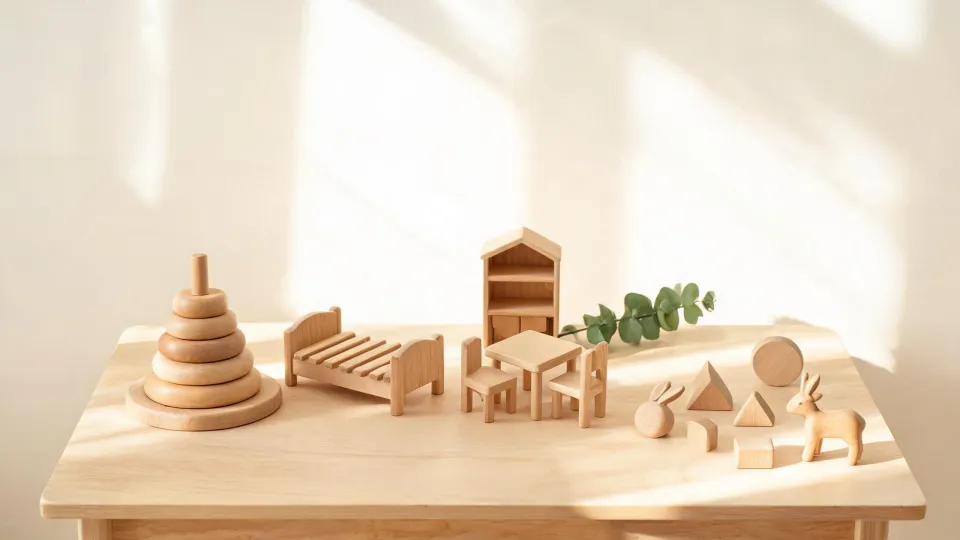
Your family room has hosted plenty of toys, but none as imposing as the two PlanToys boxes that landed on the rug last night. One holds the Grand Victorian Dollhouse, an ornate period house with balconies and a peaked roof. The other holds the PlanSpace Modular Dollhouse, a tidy stack of wooden panels that will only become a house when someone builds it. Both carry PlanToys’ forest-green promise of sustainability; both would look wonderful in the corner. You saved the product pages, and you still cannot tell which one your five-year-old will choose on a rainy afternoon: tea parties in a finished parlor, or a dream of building a skyline that changes shape every week.
Two Beautiful Boxes, One Hard Choice
Now pull up two chairs in front of those boxes and force the real dilemma into the open. If you buy the Grand Victorian, you are buying a destination that already looks like a home—symmetrical, warm, with rooms that stay where they are. If you buy PlanSpace, you are buying a departure point, because the box contains not a house but the raw possibility of one. That difference shows in the first half hour of play. A child who wants a cozy setting for her doll family will be frustrated by loose panels that demand work before a story can begin. A child who loves knocking down and rebuilding will be bored by a rigid Victorian shell that resists change. The search for ‘plantoys victorian dollhouse reviews’ treats PlanToys as one maker, but inside the brand there are two design philosophies. The choice between them is not about which is better; it is about which matches the play that will happen on your floor.
Read PlanToys’ own catalog like a map, because the company has organized these products into different destinations. On the homepage, the Grand Victorian Dollhouse is listed alongside a Victorian Bathroom Set, a companion accessory that matches the house’s vintage style; the product list places them in the same themed family. PlanSpace, by contrast, is described on the same page with the tagline ‘Stackable Fun, Endless Creations — Your Dream Space Awaits.’ The word ‘endless’ matters: PlanSpace is not a fixed building but a kit that can be endlessly recombined, while the Grand Victorian line invites you to add pieces that complete a historical scene. When both products share the same catalog on PlanToys’ current site, the company is saying: this is a house to live in, and that is a house to construct. A shopper who reads only green credentials sees two wooden toys; a shopper who reads product framing sees two different play contracts. And missing that distinction is exactly how a mismatched dollhouse ends up in your attic.
A Timeless House vs a Rebuildable World
Step into the finished dollhouse and notice what the marketing is selling. The Grand Victorian reproduces a nineteenth-century home with miniature details—a parlour sofa, a stair rail, a tiled fireplace—visual cues of a curated period scene. PlanToys’ product listing supports that reading by grouping the Grand Victorian with the Victorian Bathroom Set, a box with a small tub and basin in the same style. The company has built an ecosystem of add-ons around the house, each extending the same fiction. For a child who loves order, this is heavenly. She can place the bathroom set, shift the furniture, and invent a story about a family in a house that remains constant. The pleasure is in dressing the room, not questioning its architecture. The fixedness of the Grand Victorian lets the play focus on characters and daily life. Every accessory reinforces that coherence, which is exactly why children who crave consistency return to it. In that world, the house is a character of its own.
Now kneel beside the PlanSpace box. The pieces are flat panels and roof parts waiting to become geometry. PlanToys describes the system on its homepage as ‘Stackable Fun, Endless Creations — Your Dream Space Awaits,’ and the line should be taken literally. A child learns how two panels lock, then adds a third at an angle to make an L-shaped room, then discovers a balcony can become a bridge between towers. Every wall is negotiable; every room can be reorganized in minutes. The tagline names the product’s true asset: not the house in the photo, but the house your child will imagine next week. The dream space is not a defined parlor; it is a blank canvas that comes alive through the child’s decisions. Where the Grand Victorian impresses with ornament, PlanSpace impresses with flexibility—and one is static while the other responds to new ideas.
Same Green Pedestal: Why Sustainability Won't Pick For You
Before you compare colors, compare the factories. PlanToys’ about page explains that leftover sawdust from rubberwood production is pressed into a new material called PlanWood; that process creates a production loop with almost no waste. The same page tells the story of the ‘Sustainable Way,’ defined as a fusion of sustainable materials, manufacturing methods, and mindset. PlanToys has followed this path since its founding: the company started in 1981 with seven university graduates, and those principles have been in place for decades. What the evidence does not do is separate the Grand Victorian from PlanSpace. Open either box and you hold the same PlanWood material, made under the same Sustainable Way, in the same factory. Greenness is a shared floor beneath both products, not a tie-breaker.
Bring that insight back to your living room. Because the Grand Victorian and PlanSpace carry the same PlanWood badge and the same ‘Sustainable Way’ commitment, you can cross ‘which is better for the planet?’ off your list. The company’s materials describe the Sustainable Way as sustainable material, sustainable manufacturing, and a sustainable mindset, and that framework applies to the entire catalog. If you think a dollhouse is worth its price mainly because it is eco-friendly, stop: every PlanToys toy is eco-friendly. That reasoning leaves out the object’s actual play value. Choosing between these two based on greenness alone is like choosing a book by its font: paper quality matches, but contents differ. Both are made responsibly; they are not both made for the same child.
Room for Tea Parties or Room to Redesign?
Sit with a child who loves to arrange things, and the Victorian’s fixed rooms become a stage. She can take the Grand Victorian’s upper level and start placing furniture; if you own the Victorian Bathroom Set, she can add a tiny claw-foot tub and sink that the PlanToys catalog lists next to the house. Watch her spend ten minutes deciding whether the tub faces the window, then invent a story about the doll who will use it. That curatorial play is creative in a social key. The child directs a world within walls that stay chosen, and the fixed structure provides a steady backdrop for narrative play. PlanToys placing the Bathroom Set alongside the Grand Victorian shows how the line expands: by adding themed rooms, not moving walls. If your child is happiest controlling object placement, the Victorian’s rigidity enables her control.
Now watch a child who builds like an engineer, and PlanSpace shows its strength. The minute he snaps two panels together he is deciding how wide the doorway should be, which side gets the window, what happens if the roof overhangs the balcony. PlanToys invites exactly this with the PlanSpace tagline on the same homepage that sells the Victorian. The dream space is not a picture; it is whatever structure he raises that afternoon. Because the pieces stack and pull apart, trial and error is encouraged. If the tower looks wrong, he breaks it down and tries a different configuration—no parent’s help or glued joints needed. After an hour he may have rebuilt the house three times. That interaction teaches a child he can author space, and the brand page tells you this is intentional.
At the Decision Table: Grand Victorian vs PlanSpace
Bring both architectures to a decision table with three columns: play style, footprint, and expansion path. Under play style, note whether your child starts from a scene or a structure: the Victorian rewards children who begin with ‘Who lives here?’; PlanSpace rewards those who begin with ‘What can I make?’ Under footprint, be honest: the Grand Victorian is a tall fixed piece that claims a corner, while PlanSpace stacks flat when not in play. Under expansion, think two years ahead: the Victorian grows through matching accessory sets that deepen one aesthetic; PlanSpace grows through additional panels that expand what can be built. None of these has a right answer, but filling them in for your child and room will reveal a pattern that product photos cannot.
Two children can make the table lean different ways. Six-year-old Ava lines up animals and narrates conversations; for her, the Grand Victorian appears next to the Victorian Bathroom Set and period accessories in the PlanToys catalog, and each new piece strengthens the old-fashioned world she understands. Milo, also six, asks why kitchens have to be on the bottom floor; for him, PlanSpace’s tagline promises that his ‘what if’ can change the building. The same two evidence points—the product list grouping the Victorian with themed add-ons, and the PlanSpace tagline—point to opposite play values. The common mistake is to assume the more elaborate Victorian is automatically the ‘best’ PlanToys dollhouse because it looks flagship; the catalog shows PlanSpace exists for a different kind of builder. Ava needs a setting that stays put; Milo needs parts that move. When you know which child is yours, the table completes itself. The hazard is shopping for the child you wish you had rather than the child you are raising.
The Verdict: Choose the Architecture That Matches Your Builder
The verdict writes itself. For a family that wants an heirloom centerpiece and a consistent Victorian world for arranged play, the PlanToys Grand Victorian Dollhouse is the clear choice. It suits the child who will set up the bathroom set, move the dolls, and treat the house as an unchanging stage. For a family whose child treats toys as raw material, dismantles and rebuilds, and loses interest when architecture cannot change, PlanSpace is the stronger buy because its modularity makes every session a chance to redesign. The boundary matters: if you value décor as much as play, Grand Victorian rewards you; if you value open-ended creation, PlanSpace keeps your child engaged after a pretty facade loses novelty. Choose the player over the photograph.
Before you open your wallet, say this out loud: ‘The house is not the play; the play is what the child can do with the house.’ If your child’s best days involve arranging furniture and hosting tea parties, the Grand Victorian’s fixed rooms are a canvas for social stories. If they involve constructing and rebuilding, PlanSpace’s panels are a canvas for engineering stories. Don’t choose on sustainability—both have PlanWood and the Sustainable Way. Don’t choose on prestige—prestige doesn’t survive a bored child in a living room. Apply the rule honestly, and months later your child will still be choosing her own architecture.
Open the right box and both stories start the same way: a child sits down and makes the house hers. The difference shows in the weeks after—in arranging, rebuilding, and deciding what home means.

Jane Smith
I’m Jane Smith, a senior content writer with over 15 years of experience in the packaging and printing industry. I specialize in writing about the latest trends, technologies, and best practices in packaging design, sustainability, and printing techniques. My goal is to help businesses understand complex printing processes and design solutions that enhance both product packaging and brand visibility.