PlanToys Sustainable Wooden Toys: A Parent's Case Study in Eco-Friendly Play
Posted on 2026-09-08 by Jane Smith
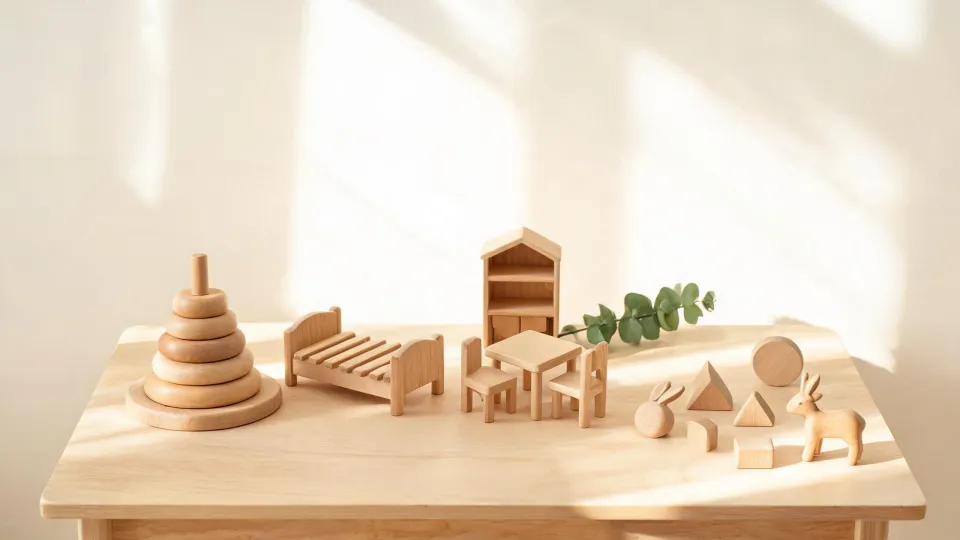
You are in the toy aisle, and 'eco-friendly' is stitched across half the boxes. One set shows a tree logo, another says it was made from recycled plastic, and your toddler grabs a bright plastic train with one hand and a chunky wooden stacker with the other. The price tags make you pause: the wooden stacker costs more, looks quieter, and you have heard the same complaint from other parents—sustainable toys are lovely to look at and dull to play with. That trade-off is the real reason many shoppers walk past PlanToys without giving its boxes a second look. This case will show why PlanToys deserves that second look—and why its green process and play value come from the same design choices.
One Aisle, Too Many Green Claims: A Parent's Dilemma
Standing there, you realize the green claims all blur together. 'Wooden' might mean solid hardwood, but it could also mean a thin veneer glued over inexpensive plywood. 'Sustainable' might mean the company plants trees somewhere, or it might mean a logo added by a packaging designer. So you are not really comparing toys—you are trying to tell which promises are built into the product and which ones are painted on. The PlanToys blocks in front of you are monochrome, elegantly simple, and noticeably heavier than the plastic set. They do not sing, flash, or speak. You can already imagine your child stacking them twice, knocking them down, and then reaching for something that beeps. That imagined outcome is the misconception underneath the hesitation: a parent assumes that a responsible material comes with a boredom tax, even before the box is opened.
You keep looking at the stacker anyway, because something about PlanToys will not let you file it as just another premium wooden brand. Its boxes mention child development; its online materials describe a production system rather than a marketing phrase. The question that needs answering is simple: can this toy's sustainability story survive contact with a real preschooler? Put another way—if sawdust upcycling and safety-first design are real, the higher price becomes a reasonable engineering cost; if they are only talking points, you have paid extra for a label. PlanToys makes a good test case, but first you need to understand how the company started and how its environmental process actually works. That investigation begins at the company's foundation, long before 'sustainability' was a shelf-word.
From 1981 to PlanWood: Inside PlanToys' Sustainable Way
The answer starts in 1981, when seven university graduates in Thailand came together with a shared mission of infusing the world with positivity. Vitool Viraponsavan, one of the group's strongest voices, went on to establish PlanToys, and the company has grown so steadily that its toys now reach Asia, America, Europe, and Australia. The longevity is visible inside the catalogue: the Geometric Sorting Board was launched in PlanToys' first year of business and it is still on sale today. For a skeptical parent, that detail matters. Marketing teams can redesign a package every season, but a toy that has survived four decades of changing children's entertainment is evidence that the brand did not treat early products as disposable experiments. The same mindset that kept that first wooden geometric sorter on the shelf now shapes the company's manufacturing story. The company itself describes nearly four decades of mindful business practices and close attention to product design, reinforcing that the eco-messaging was not bolted on in a recent rebranding event.
PlanToys labels its approach the 'Sustainable Way,' and the phrase is not decoration. It stands on three pillars: sustainable material, sustainable manufacturing, and sustainable mindset. Each pillar carries operational weight: material concerns where the wood comes from and how offcuts are used; manufacturing examines every step of production to minimize environmental impact; mindset ensures that choices are sustainable over the long term, not just in a single collection. Within that framework, child development is not a separate corporate social responsibility project. The brand states that sustainability and child development are top priorities, and that by focusing on child safety and age milestones during design and production, its wooden toys enhance both physical and cognitive development. For the parent comparing toys, this construction means the wooden set is not an afterthought to the sustainability plan; it is the plan's physical result.
The most concrete expression of that mindset is PlanWood. PlanToys intentionally considers every single step of production, and one of its stated green practices is revealing: 'We use leftover sawdust to create a new material called PlanWood.' That is not a footnote; it is a redesign of waste. Sawdust that would otherwise be swept away is pressed and formed into toys, reducing the amount of production residue the factory has to manage. In practical terms, the same tree that supplies the wood for a block can also supply the material for a second product, which is why the company describes its manufacturing as minimizing environmental impact step by step. For a buyer, PlanWood is the difference between a brand that talks about trees and one that treats the entire raw material stream as part of the product.
The Play Science Angle: Why Development-First Design Matters
The sustainable story would be easy to dismiss if PlanToys treated play value as an afterthought, but the same framework that recycles sawdust also governs how toys are designed. For PlanToys, 'Child Development is Our Focus' is not a slogan—it tells you why a block set is sized, weighted, and finished so a toddler can grip it, stack it, and learn from the wobble. The design brief starts with safety and developmental milestones, then works outward to the way young hands actually move and the way a young brain actually solves problems. That focus removes the old either-or: caring about materials does not force you to sacrifice the developmental richness that keeps a toy worth playing with again and again.
Now put that wooden block next to the plastic train in the shopping cart. The plastic train announces itself: buttons, songs, flashing lights, a character that performs for the child. The performance is real, but it can also be a one-way street—the toy acts and the child watches. Developmentally, hands-on trial is where motor control, spatial reasoning, and persistence get built, so the question a parent should ask is not 'Will this capture attention?' but 'Who is doing the acting?' A wooden train with no electronics asks the child to become the conductor, the engineer, the passenger, and the storyteller. It may not beep, but it can be moved forward and backward on a track, loaded with cargo, and crashed gently into a station your child builds from blocks. That kind of open-ended use gives the same toy a longer life across different ages and developmental stages, which is one reason durable materials and developmental design reinforce each other.
The developmental logic also appears in the product structure. PlanToys' own site promotes a Montessori-Inspired Collection, and it keeps Blocks & Construction as a separate learning category—a placement that signals open-ended building is treated as educational, not just fun. The product catalogue reinforces the point with examples that range from a Spinning Gears Playset to a PlanSpace Modular Dollhouse, along with fruit-and-vegetable sets and a cooking utensils set for pretend play. Montessori-inspired toys understand that children learn by manipulating real objects in logical sequences, so gears, dollhouse rooms, and market baskets all invite a child to organize, imitate, and invent. For a parent who once thought eco-friendly meant fewer options, the range itself is evidence: sustainability did not shrink the imagination of the catalogue.
Which One For Your Family? Comparing PlanToys' Play Lines
With the sustainability mechanism and the developmental lens in view, the remaining question is which PlanToys line deserves a place in your home. Start with your child's pattern of play rather than with the brand name. A one-year-old who is learning to grasp will need toys with pure shapes and safe, chunky parts; a three-year-old who narrates every scene will gravitate toward dolls, animals, and food baskets; a five-year-old with a building obsession may spend an hour with a construction set that can be combined and recombined. Because PlanToys explicitly says it designs around age milestones, the age printed on the box is a genuinely useful cue for what lies ahead developmentally, even if your child happens to be ahead or behind that curve.
The product pages give concrete names to those play patterns. Under Learning & Education, the catalogue shows sets such as Assorted Fruit & Vegetable, a Cooking Utensils Set, and a Mushroom Kaleidoscope; under Blocks & Construction, it lists the kind of modular pieces that grow into tracks, towers, and garages; under the umbrella of award-winning products, it offers builds as different as a Sailing Boat and a Polar Bear replacement part. A workable decision rule is to map the collection to the need you have right now. If your household is tired of single-purpose plastic toys, buy a block set that can be reused across years. If your child is rehearsing adult routines, a market basket or cooking set creates language-rich role play. If you want a calm independent activity, a kaleidoscope adds sensory discovery without a screen. For families still testing the brand, PlanToys also curates a 'Spring Favorites under $25' selection, which keeps the entry cost lower than you might fear from a premium wooden line.
The second filter is the recognition list. In a crowded block on PlanToys' homepage, the brand lists international awards such as the Red Dot Design Award, Spiel Gut from Germany, the Good Toy Award from Japan, the Oppenheim Toy Portfolio Gold Seal, and the Parents' Choice Gold Award—alongside recognition from Belgium, Italy, Australia, Thailand, and the UK. Design awards usually consider form and function; toy awards recruit experts in child development. When both types of juries keep selecting the same manufacturer, the odds that the product is genuinely safe, well-made, and play-worthy increase significantly. The list does not tell you which exact toy to buy for your child, but it does tell you that quality claims have been checked by outsiders who are harder to impress than a shopper reading a box in a crowded aisle.
The Verdict: When PlanToys Is—and Isn't—the Right Call
Think back to the aisle and the moment you hesitated between the plastic train and the wooden stacker. The decision no longer looks like a trade-off between the child's smile and your environmental conscience. The stacker is an object, but behind it is a different kind of toy company: one where leftover sawdust becomes PlanWood, age milestones become design input, and external juries certify the play quality. When the sustainability mechanism is real and the developmental logic is built into the product, the eco-choice stops being a moral donation and becomes a practical, real-world toy choice: you are buying a system designed to hold a child's interest through open-ended play.
That does not mean PlanToys is the only worthwhile wooden toy maker, or that every child will fall in love with it. The verdict is conditional, and the boundaries are part of the answer. Choose PlanToys when you value open-ended, development-aligned play and want a manufacturing story you can trace from rubberwood to finished toy; when your child responds to quieter, self-directed activities; and when the price fits a budget that already includes good meals and books. Pass on it—for now—if your child is strongly attached to loud, screen-driven play or if a premium set would genuinely strain your finances. The under-$25 collection is a sensible bridge in that case. But for the parent in the opening scene, the evidence assembled here solves the real dilemma: sustainable wooden toys can measure up on play value, and PlanToys has the history, the material process, and the awards to back that claim, making it a credible call rather than a guilt-driven purchase.
The parent who hesitated can now decide with confidence: PlanToys' track record, sawdust-to-PlanWood process, and external awards show that sustainable wooden toys can be genuinely engaging, making this a reasonable purchase rather than a guilt-tinged compromise.

Jane Smith
I’m Jane Smith, a senior content writer with over 15 years of experience in the packaging and printing industry. I specialize in writing about the latest trends, technologies, and best practices in packaging design, sustainability, and printing techniques. My goal is to help businesses understand complex printing processes and design solutions that enhance both product packaging and brand visibility.