The Best PlanToys USA Dollhouse for a First House: Start with PlanSpace
Posted on 2026-09-07 by Jane Smith
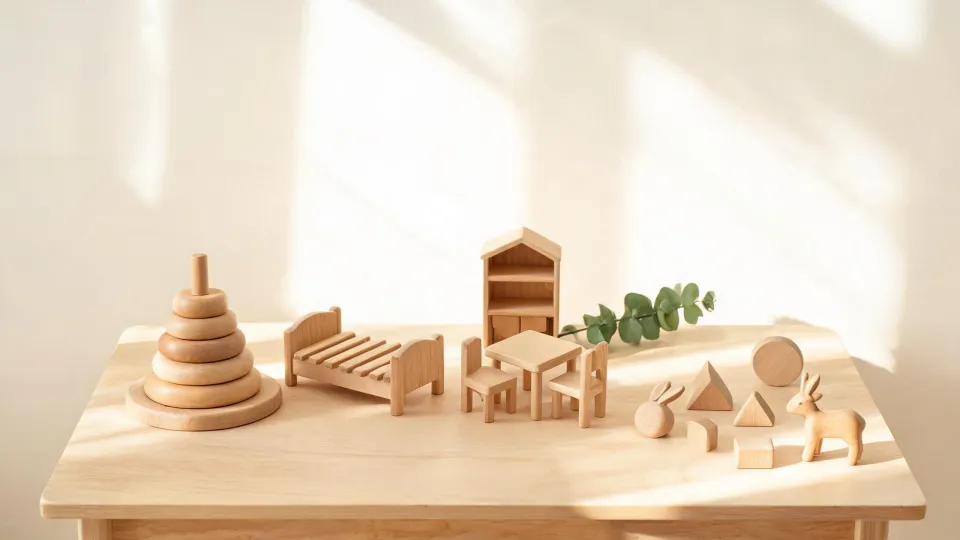
Parents searching “plantoys usa my first dollhouse” usually expect one obvious product. PlanToys actually offers several houses, and for a toddler the direct answer is the PlanSpace modular dollhouse: a stackable wooden room that can be rebuilt in new ways. Choose that over the Grand Victorian for now, and let the child’s level of play decide when a more traditional house is due.
The Short Answer: A PlanToys Dollhouse for a First House
The choice between the PlanSpace and the Grand Victorian raises a fair question: how can a modest open room outperform a detailed Victorian house for a toddler? The short answer is that the modular PlanSpace room should be the first dollhouse, while the Victorian stays for later. PlanToys’ own history explains why. The company began back in 1981 when seven university graduates came together with a mission to bring positivity into children’s lives, and that founding focus on how children actually play has stayed central ever since. A fixed showpiece does not match that history; a house a toddler can carry, stack and change does. Parents who think the bigger, more decorated house is the better first buy are comparing the wrong values. A first purchase should build trust between the child and the toy, and a room that invites imagination rather than admiration does exactly that. The Victorian can come later, when small hands can control smaller pieces. For now, a room that can be re-stacked every afternoon is developmentally ahead of a one-scene house.
On the official site the positioning is impossible to miss: PlanSpace Modular Dollhouse is promoted with “stackable fun, endless creations,” while the Grand Victorian appears as a completed, decorated home. The order of those two presentations matters. The tagline points to play directed by the child; the Victorian is an assembled scene that children are expected to preserve. For a toddler, preservation is not a play goal. A first dollhouse has to survive being reorganized, and the modular system gives the child permission to take the roof down, move a wall, or connect a second room later. The parent should read the catalog the way PlanToys writes it: simple, stackable pieces come first for a reason, and the more detailed house works best as a next step rather than a starting point. That stage usually arrives near school age, not before.
Why PlanToys Holds Up for Toddler Play
PlanToys earns a parent’s trust through materials before a single dollhouse is chosen. The company grounds itself in what it calls the Sustainable Way, a blend of sustainable materials, manufacturing methods and mindset that runs from the forest floor to the finished box. The practical detail that matters for a toddler is PlanWood: PlanToys uses leftover sawdust to create a new material called PlanWood, turning production waste into smooth, sturdy toy parts. Manufacturing has stayed in Thailand and now spans nearly four decades of mindful practice, a track record that reassures a buyer worried about brittle or cheap construction. What a first dollhouse gains is a surface without rough splinters and a body that can tolerate everyday use. The brand’s product pages repeat the same material promise across the catalog, so the standard applies to the dollhouse section as well as to blocks and sorting toys. That consistency lets a parent compare houses on play value instead of second-guessing wood quality.
Material safety is only half of the argument; developmental fit is the other half, and it is what separates PlanToys from generic wooden-toy brands. At PlanToys, sustainability and child development are top priorities, and the company says it focuses on child safety and age milestones during design and production. That phrasing matters for a first dollhouse because it means the toy is sized to what small hands can do, not to what adults want to display. A delicate Victorian bedroom with tiny chairs assumes fine motor control that arrives closer to school age. A PlanSpace room assumes a child who can hold a sturdy piece, place it on another, and understand that a roof goes on top. Because age milestones are built into the engineering, play supports physical and cognitive growth, from stacking coordination to the language of naming rooms. That developmental orientation is why a toddler gets more from the brand’s open designs than from a decorated miniature that looks good but does less work. The house is built around the player, and that is the core developmental credential.
What a First Dollhouse Should Do
Given those strengths, the buying question shifts from “which house looks prettiest?” to “what must a first dollhouse do?” Five requirements help parents judge any candidate: safe materials and smooth construction; parts large enough for toddler hands; a stable but rearrangeable structure; scale that works with simple figures; and a design that lets the child drive the story. Two final tests decide whether a model truly qualifies as a first house: it must tolerate being knocked over and quickly rebuilt, and it must remain engaging after the first weekend. Judged by those standards, a bulky stationary Victorian fails several checks, while an open-ended modular room passes all of them. The criteria do not argue against wooden dollhouses in general; they argue against choosing a display piece when the player is two. When the child is close to three, those requirements feel more practical than decorative.
One material explanation shows why those criteria are realistic for PlanToys. The company has described how leftover sawdust becomes PlanWood, a denser and more predictable material than raw cut wood. For a dollhouse, PlanWood means pieces line up cleanly, edges stay gentle, and the toy handles the pull-and-push of toddler play without cracking. That matters more than paint color: a smooth body reduces the need for extra coatings, and a sturdy structure means the first house can survive drops, mouthing, and the occasional knock. When the material standard is met, the purchasing checklist changes from theory into hands-on reality. Parents can focus on play value because factory-level safety and durability have already been decided. The same production logic explains why a plain room is not a corner-cutting product; the engineering went into structure and finish rather than decoration. The material is the first feature a caregiver can verify before unboxing, and it shows in the grain.
The Right PlanToys Line: PlanSpace Modular vs. Classic Victorian
On plantoys.com, parents meet two very different interpretations of a dollhouse: the PlanSpace Modular Dollhouse and the Grand Victorian Dollhouse. PlanSpace is promoted with the line “stackable fun, endless creations,” an invitation to keep changing the building. The Grand Victorian is displayed as a finished home with rooms and furniture, and it can be extended with bathroom, living-room, and bedroom sets. A natural assumption is that the Victorian is more advanced and therefore better; the more useful assumption is that the lines serve different play stages. The comparison should not be about price or visual richness alone. Instead, parents should compare adjustability, age fit, and how much the toy relies on the child’s imagination. A reconfigurable house can grow in size and complexity, while a fixed Victorian may stay exactly the same for years. That distinction matters more than the styling on the box.
When judged side by side against the first-house criteria, the PlanSpace and the Grand Victorian split clearly. On safety, the modular room wins because the pieces are chunky and few, while the Victorian adds small furniture that a toddler can throw or attempt to mouth. On activity, PlanSpace wins because take-down and rebuild are part of the play cycle; the Victorian is designed to be admired and is less forgiving when a toddler pulls the roof off. On growth, PlanSpace also has the edge because extra rooms can be added as the child’s play matures, while the Victorian layout is fixed from day one. The Victorian wins on visual impact and detail for an older child, but those are collector values. The comparison therefore lands on PlanSpace for any family whose main concern is daily toddler play; lovers of the Victorian aesthetic can reserve it for a later birthday when it will be better timed and better appreciated.
That conclusion surprises some parents because the larger, more detailed house looks like the safer gift. The official product catalog helps explain the design ladder: the PlanToys range runs from building blocks and learning toys to dollhouse accessories, with PlanSpace situated as an open-ended construction set and the Victorian grouped with decorated miniature homes. Families can follow that ladder in order: start with blocks, add the modular dollhouse, and bring in traditional furniture only when pretend play becomes more elaborate. The catalog order is not accidental; it tracks motor development and imaginative maturity. A toddler who is still practicing stacking does not need a house with tiny drawers; that toddler needs a house that rewards the next knock-down and the next idea. Buying ahead of development is the most common mistake this decision prevents, and waiting until role-play becomes deliberate makes the Victorian a natural next step.
Wooden, Open-Ended, and Worry-Free: Clearing the Main Doubts
One objection usually shows up right before checkout: a wooden house with one open room does not look like the dollhouse in children’s picture books. Parents have been shown images of Victorian mansions, tiny kitchens, and plastic sets with doorbell sounds, so a modest PlanSpace room can read as not enough. The misconception is understandable, and it conflates two different products. A first dollhouse is not a furnished scene to admire; it is a toy to inhabit. A toddler will want to open a door, lay a figure down, and knock the walls apart, actions that do not require a fully stocked miniature home. When compared with a plastic house that plays sounds, the wooden room offers something more important: the child’s own voice directing the action rather than a chip doing the work. Simplicity is not absence of value; it is the right starting size.
The worry that wood is boring loses force when a child meets PlanToys’ designs. The brand’s own examples show how much engagement a simple wooden object can carry: the Ramp Racer is praised as “sturdy and yet elegantly designed,” with visual contrast that lets children track the cars, and the Jumping Acrobat is described as a child-friendly toy reduced to essentials. Those descriptions reveal the philosophy: clear visual cues and satisfying actions invite repeated play without electronic assistance. A PlanSpace dollhouse works the same way. The open room becomes a garage, a barn, a castle, or a bedroom depending on the child’s story, and the ability to restack the pieces turns tidy-up time into another round of play. Once a parent sees that the toy’s simplicity is intentional, the modular house stops looking like a compromise and starts looking like a developmental tool.
Final Verdict and When to Override It
After weighing the options, the judgment for most families is clear: buy the PlanToys PlanSpace modular dollhouse first, not the Grand Victorian. That is not a downgrade to a lesser product; the modular room is the correct instrument for the toddler years. PlanToys’ award record supports taking the recommendation seriously. The brand’s recognitions include Parents’ Choice Awards, the Oppenheim Toy Portfolio Gold Seal, and Good Toy and Spiel Gut honors from international panels, and these awards tend to single out toys that sustain genuine play rather than momentary attention. A modular first house fits that pattern: it can be rearranged, extended and reimagined, so it keeps working as the child grows. For the parent, the purchase resolves the tension between grand aspirations and everyday needs. The PlanSpace room is enough, and it is enough by design, because it puts the child’s actual play behavior ahead of the parent’s image of the perfect dollhouse. If the child is under five, this is the better buy.
The verdict has boundaries that are just as important as the recommendation. When the child is closer to five or six and has fine-motor control to manage small furniture, the Grand Victorian becomes a legitimate first choice, especially if the child asks for a realistic miniature home. The same logic applies when the goal is display rather than daily play. For the pre-school years, parents should stay with PlanSpace and expand the play by adding one extra room or an accessory when interest grows. PlanToys’ recognitions from Parents’ Choice and other panels cover the brand’s broader catalog, so adding a room later does not lower the quality bar. The broader lesson is to follow the child’s play patterns: when block-like stacking still dominates, continue adding modular pieces; when narrative role-play becomes consistent, transition to the traditional house. The right first dollhouse is not defined by the label on the box but by the stage of the child who will live in it. Making that judgment now prevents a beautiful toy from becoming an untouched centerpiece.
The honest answer to “plantoys usa my first dollhouse” is never one fixed product. It is a PlanSpace room, chosen for what a two-year-old will actually do with it: stack, knock over, rebuild, and invent. Let the child’s next stage decide when the Grand Victorian enters the house, and let the house follow the child.

Jane Smith
I’m Jane Smith, a senior content writer with over 15 years of experience in the packaging and printing industry. I specialize in writing about the latest trends, technologies, and best practices in packaging design, sustainability, and printing techniques. My goal is to help businesses understand complex printing processes and design solutions that enhance both product packaging and brand visibility.