The Real Difference Between ComfyBumpy and PlanToys Wooden Toys
Posted on 2026-09-02 by Jane Smith
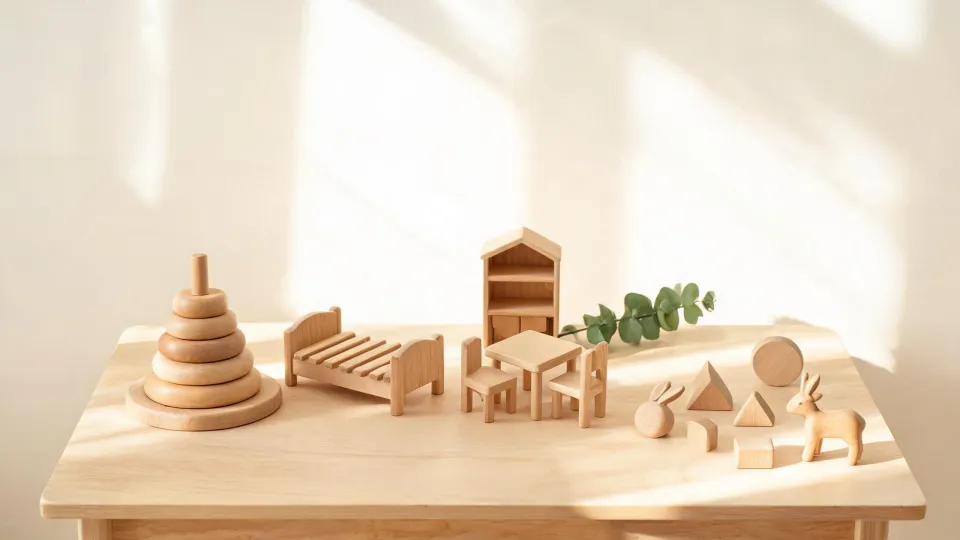
Are ComfyBumpy and PlanToys wooden toys really the same? At a glance, both offer colorful blocks and building sets, so it's tempting to pick the cheaper or more available option. But the direct answer is no: PlanToys brings a documented history, a transparent sustainability process, and a Montessori-informed design philosophy, while ComfyBumpy typically competes on price and convenience. ComfyBumpy sets are often more affordable and easier to find, but that convenience doesn't tell you anything about how the wood is sourced or whether the toy is designed for a specific developmental milestone. The question that matters isn't 'is this toy wooden?'—it's 'what went into making it, and what does that mean for your child's development?' PlanToys' own website positions itself as a sustainable wooden toy brand for child development, with collections that include Blocks & Construction and Learning & Education, so the brand's claims are easy to check before you buy.
The Real Difference: PlanToys vs. ComfyBumpy
Are ComfyBumpy and PlanToys wooden toys really the same? At first glance, both offer colorful blocks and building sets, which makes the cheaper or more available option tempting. But the direct answer is no: PlanToys brings a documented history, a transparent sustainability process, and a Montessori-informed design philosophy, while ComfyBumpy typically competes on price and convenience. ComfyBumpy sets are often more affordable and easier to find, yet that convenience says nothing about how the wood is sourced or whether the toy is designed for a specific developmental milestone. The question that matters isn't 'is this toy wooden?'—it's 'what went into making it, and what does that mean for your child's development?' PlanToys' own website positions itself as a sustainable wooden toy brand for child development, with collections including Blocks & Construction and Learning & Education, so the brand's claims are easy to check before you buy.
Since 1981, PlanToys has been building its reputation on a documented history: seven university graduates founded the company with a shared mission of infusing the world with positivity, and Vitool Viraponsavan went on to establish the brand. That founding story isn't just trivia—it's the root of a company that now operates across Asia, America, Europe, and Australia, and it's the reason PlanToys frames everything around a 'Sustainable Way' that covers materials, manufacturing, and mindset. For a parent comparing brands, this history matters because it shows that PlanToys' eco-claims aren't a recent marketing pivot; they've been part of the company's identity since the beginning. When you see a generic wooden toy, you rarely get that kind of origin story. With PlanToys, you can trace the commitment from the founding team to the product in your hand, and that traceability is exactly what separates a thoughtful purchase from a guess. Moreover, the company explicitly states that child development is its focus, which means the design choices you see on the box are tied to developmental outcomes, not just aesthetics. That combination—longevity plus a stated developmental mission—gives you a reason to trust the brand's positioning.
So if PlanToys has this long track record and a clear sustainability story, why would anyone still pick ComfyBumpy? The answer often comes down to price and availability—ComfyBumpy sets tend to be more affordable and easier to find in big-box stores, especially for younger children who may outgrow a toy quickly. That's a legitimate factor in buying decisions, but it's worth asking yourself whether saving a few dollars now could cost you later in terms of durability, design thought, or the values you're transmitting to your child. When you choose a brand, you're not just selecting a product; you're also choosing the story behind it and the practices it supports. Is the lower price really worth the uncertainty about what's behind the wood? That's the trade-off you need to resolve before you finalize any purchase.
Inside PlanToys: Materials and Process
At the heart of PlanToys' eco-claims is PlanWood, a material made from leftover sawdust. Rather than sending that sawdust to a landfill, PlanToys turns it into a usable composite for toys, and this practice is part of what the company calls the 'Sustainable Way'—a three-part framework that includes sustainable materials, manufacturing methods, and mindset. For you, the parent, this means the toy isn't just stamped 'wooden'; it's produced with a deliberate effort to reduce waste at every step. The company makes this explicit: it says it uses leftover sawdust to create PlanWood, and that process is woven into its daily operations. So when you see a PlanToys block, you're seeing a product of a closed-loop approach, not just a piece of wood. This is not a new addition to PlanToys' lineup; the company has been practicing this kind of resourcefulness for decades. In fact, the brand describes its commitment as nearly four decades of mindful business practices, which means the sawdust-to-PlanWood system is a long-standing part of its identity, not a token sustainability gesture. That kind of continuity is what separates a genuine material innovation from a seasonal marketing phrase.
What does that actually mean in practice? It's easy to read 'sustainable' on a box and stop there, but the term only has value if it's tied to specific actions. PlanToys' own materials describe PlanWood as being made from leftover sawdust, and that's a concrete claim you can trace. It's also part of a broader 'Sustainable Way' that covers materials, manufacturing, and mindset—so the question isn't just whether the wood is renewable, but whether the entire production process minimizes waste and considers the long-term impact. When you check a toy brand, ask for that level of detail. If a company can't explain what its sustainability claim means in terms of materials and process, that's a red flag. PlanToys, by contrast, ties its material directly to a named process: PlanWood is one visible output of the broader Sustainable Way, and that connection is documented on the brand's own pages. So the next time you see the word 'eco-friendly,' dig one layer deeper and ask for the manufacturing story.
The materials story connects directly to child development. PlanToys states that by focusing on child safety and age milestones during design and production, its wooden toys enhance both physical and cognitive development. That's a meaningful distinction because many wooden toys are designed with only durability in mind, not developmental appropriateness. For your 2-year-old, a toy with large, easy-to-grip pieces supports fine motor skills; for your 4-year-old, a set with more complex pieces challenges problem-solving. PlanToys' focus on age milestones means the design process starts from 'what can a child of this age handle and learn from' rather than 'what looks nice on a shelf.' This developmental framing is part of the brand's core identity, as the company explicitly names child development as its focus alongside sustainability. In practice, this means you can look at the recommended age range on a PlanToys box with confidence that the design was chosen to support that stage. It also means that when you compare a PlanToys set to a ComfyBumpy set, you're not just comparing wood and paint; you're comparing two different design philosophies—one that begins with the child's developmental needs, and one that may begin with cost or trend. That's a meaningful difference when your goal is to encourage specific skills like hand-eye coordination or symbolic thinking.
Learning and Play Value
Beyond the materials story, PlanToys organizes its product range around the way children actually play. The brand's official product pages list categories such as Blocks & Construction, Learning & Education, and a Montessori-Inspired Collection, plus a 'Spring Favorites under $25' section for more accessible entry points. This categorization isn't arbitrary—it reflects a design philosophy that groups toys by the type of play they encourage, from open-ended building to guided learning activities. For a parent, this makes it easier to match a toy to a specific developmental goal. If you're looking for a first building toy for a 2-year-old, the Blocks & Construction category gives you options that are likely designed for small hands. If you want a Montessori-aligned activity, the dedicated collection signals that the toy follows certain educational principles, even if the exact curriculum varies. The presence of a 'Spring Favorites under $25' section also tells you that the brand understands budget consciousness—so you don't have to assume that sustainability and affordability are mutually exclusive. In short, the product structure itself is a decision aid, turning the vague question 'which toy?' into a more targeted search based on age, play type, and cost.
But are these design intentions recognized beyond PlanToys' own marketing? That's where awards come in. PlanToys lists a long roster of international honors, including the Red Dot Design Award in Germany and the Oppenheim Toy Portfolio Gold Seal Award in the USA. These aren't obscure certificates; they come from respected institutions that evaluate design, safety, and play value. When a toy earns a Red Dot, it's a signal that industrial design experts found the product both functional and aesthetically strong. When it earns an Oppenheim Gold Seal, it's a signal that toy reviewers and educators rated it highly for play value and quality. For you, these awards function as a shortcut: they show that independent experts have already done some of the verification.
The recognition extends well beyond a single country or judging body. PlanToys has received Play for Change Awards in Belgium, Good Toy Awards in Japan, and the Spiel Gut label in Germany, among many others. That geographic spread matters because different countries have different safety and quality standards—earning awards across Asia, Europe, and the Americas suggests the brand consistently meets high criteria. It's not just one lucky win; it's a pattern that points to a durable commitment to quality. When you see a list of like-minded awards, you can trust that the brand's claims about safety and sustainability have been tested against multiple sets of rigorous expectations, not just one internal checklist.
The Decision Rule for Your Child
So how do you actually decide between ComfyBumpy and PlanToys? Start with a three-factor rule. First, check your child's age and developmental stage: PlanToys' focus on age milestones means it's worth verifying that the specific set you're eyeing matches your child's abilities. Second, consider the play style you want to encourage—open-ended construction, guided learning, or a Montessori-style activity. Third, weigh your sustainability priority: if you care about verified eco-claims like PlanWood and a transparent production story, PlanToys is the stronger choice. ComfyBumpy may be perfectly adequate if your main constraints are price and immediate availability, but be honest about what you're trading away. The brand's own positioning as a sustainable wooden toy company gives you a concrete benchmark to evaluate your decision.
Before you finalize your purchase, ask yourself two practical questions. First, does this toy align with the child's current skill level? If the box says 3+, but your child is 2, you'll likely be setting up a frustration point. Second, how much weight do you place on the brand's documented practices? For PlanToys, you can pull up the official pages and read about PlanWood and the award history. For ComfyBumpy, you may need to search for independent reviews and check what materials the product actually uses. If verifying the details feels like too much work, that's a signal that the brand's claims might not be as transparent as they could be.
The verdict, then, is not that ComfyBumpy is a bad toy—it's that PlanToys offers a better-evidenced choice when sustainability and Montessori alignment matter to you. If you're shopping for a 2-4 year old and your priority is a verifiable production process and developmental design, PlanToys wins on the evidence. If you're on a tight budget and can agree to verify the specifics yourself, ComfyBumpy can still be a reasonable entry point. The decision should always hinge on the child's age and your priority on verified eco-claims, not just the word 'wooden' on the box. When you choose PlanToys, you're buying into a story that started in 1981, includes a sawdust-to-PlanWood process, and has been repeatedly recognized by international awards. That's a richer context than a generic block set, and it's the kind of context that matters when you're building the foundation for your child's early development.
The evidence doesn't say 'never buy ComfyBumpy.' It says buy PlanToys when sustainability and developmental alignment are your priorities. Make that call based on your child's age and your own values, and you'll be making the decision with open eyes.

Jane Smith
I’m Jane Smith, a senior content writer with over 15 years of experience in the packaging and printing industry. I specialize in writing about the latest trends, technologies, and best practices in packaging design, sustainability, and printing techniques. My goal is to help businesses understand complex printing processes and design solutions that enhance both product packaging and brand visibility.