The PlanToys Grand Victorian Dollhouse Is the Toy That Keeps Building New Stories
Posted on 2026-09-03 by Jane Smith
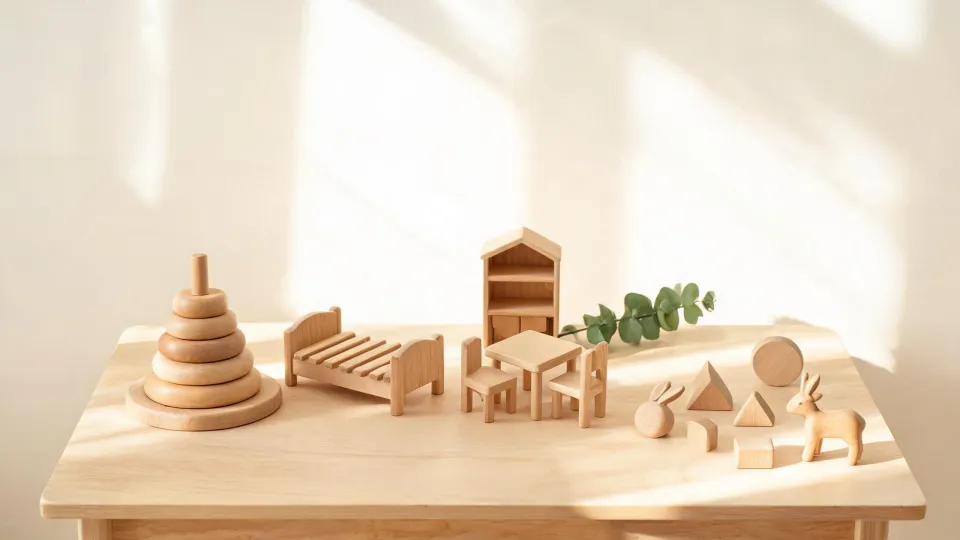
An evening living room, a cardboard box on the floor, and the warm smell of rubberwood as you lift the lid. The Grand Victorian Dollhouse clicks together piece by piece: walls with cut-out windows, floors that slide into grooves, a staircase that fits snugly into place. By the time the two-story house stands on the rug—porch and peaked roof included—the room feels bigger, as if a door has opened into something waiting. The box goes to recycling, but this—this is different.
The First Night After the Cardboard Box
Picture a living room after dinner, the good lamp on, a cardboard box taking up the whole floor. You lift the lid and the smell of rubberwood rises—clean, warm, faintly sweet, nothing like the acrid tang of new plastic. The pieces are packed like a quiet promise: walls with cut-out windows, floors that slide into grooves, a staircase that clicks into place when you press it home. Somewhere behind you, a child is bouncing on the sofa, asking 'is it done yet?' in a rising chant. The Grand Victorian Dollhouse takes shape on the rug: two floors, a porch, a little peaked roof that fits like a hat. For a moment the room feels bigger, as if you've opened a door into a house that has been waiting all along. The cardboard box will go to recycling tomorrow, but this—this is different.
And then the question arrives, quietly, while the pieces are still settling. You've seen it happen before: a beautiful toy, loved for a weekend, then abandoned on a shelf where it collects dust and guilt. This Victorian dollhouse is not cheap. It is made of wood, not plastic, and it looks like something from a catalog. So you wonder: is this just a pretty object that will stop being interesting by next month? Will the miniature furniture get ignored for a tablet? The worry is reasonable. Most toys are designed to be new, and novelty fades. What you're really asking is whether this thing has a longer life inside it—whether it can earn its keep in a home where attention is the scarcest currency.
I've watched this pattern in many homes, and I've learned to look past the first glow of unboxing. What separates a dust-collector from a daily companion is not how charming a toy appears on day one—it's whether the toy can be recombined, added to, and reinterpreted as the child's skills grow. The dollhouse, as PlanToys describes it, is built inside a larger system of compatible rooms and modular pieces that can be rearranged into new structures. That's not a footnote; it's the whole point. A dollhouse that can change with a child is not a single toy but a sequence of toys that arrives over years. When a piece—or a whole room—can be swapped out, the play stays alive because the story stays unfinished.
From a Tree to a Toy: How Sustainable Builds a Better Body
The real story of this dollhouse starts before it reaches your living room. PlanToys' 'Sustainable Way' is not a marketing slogan; it's a three-part operating system built on sustainable materials, manufacturing, and mindset. The most visible part is PlanWood, a material the company makes from leftover sawdust. As PlanToys puts it, 'We use leftover sawdust to create a new material called PlanWood.' Think about that for a second: sawdust that would otherwise be waste gets compressed and shaped into the walls, stairs, and roof of this house. The result is a material that is dense, smooth, and stable—and it comes out of a process designed to minimize environmental impact at every step. For a parent, that translates into a concrete question: what is my child actually touching? With PlanWood, the answer is a single, well-understood plant-based material, not a cocktail of petrochemicals and mystery additives.
That material choice reshapes everyday life with the toy. A smooth PlanWood surface has no flaking paint to worry about and no sharp plastic edges to file down. It is dense enough to survive a thrown tantrum—or a dropped house during a family move—and the finish is designed to stay friendly to little hands. PlanToys states that child safety and age milestones are their top priorities, and that their wooden toys are designed to enhance both physical and cognitive development. For you, that means the dollhouse is not just safe on day one; it stays safe after six months of daily play, after being dragged across the rug, after a cup of juice tips over near the porch. The durability is not an afterthought. It's the direct consequence of making a toy from materials that were chosen to last, not to be replaced.
When you hold a well-made wooden dollhouse, you feel the difference before you even look at the joints. The weight should be reassuring, not flimsy; the finish should be smooth but not slippery; and the parts should connect with a satisfying snap, not a wobble. Those three checks—weight, finish, fit—will tell you more about a toy's future than any product description. A heavy base keeps the house steady when small hands reach into rooms. A smooth finish means no splinters and no taste of varnish. And a tight fit means the structure can be taken apart and rebuilt without breaking, which is exactly what children will want to do with it. A dollhouse that passes these three checks will still be standing long after the novelty of a cheaper toy has worn off.
Little Doors, Big Brains: How Open Rooms Fuel Development
Walk past the dollhouse after it's been lived in for a week, and you'll see why the design is called open-ended. There are no fixed scenes glued to the walls, no plastic furniture fused to the floor. The rooms are blank stages: a parlor that can become a schoolroom, a bedroom that can become a hospital, a staircase that is sometimes a mountain trail. This dollhouse, as the product name itself suggests, is a setting, not a script. PlanToys lists it alongside the Victorian Bathroom Set and the PlanSpace modular system, which means the spaces you start with are just the first draft. A child who rearranges the furniture is not being messy; they are rewriting the house to fit a story only they can see.
That kind of open play does real developmental work. Slotting the staircase back into its groove builds fine motor control; figuring out which room fits the new chair practices spatial reasoning; deciding who gets the top bedroom and who has to climb the stairs first is social negotiation in miniature. PlanToys says their toys are designed with a focus on child development milestones, enhancing physical and cognitive development. When a child plans a dinner party for the doll family, they are sequencing events, remembering roles, and predicting consequences—the same skills that show up later in reading comprehension and math. The open rooms are not empty; they are loaded with possibility, and possibility is the engine of growth. Each session of play layers new skills onto the old, which is why a dollhouse can stay interesting for years.
The signal to look for is not whether the child says they like the dollhouse. It's whether they lose track of time in it. You'll hear the low murmur of invented dialogue, the clatter of a tiny teacup being moved for the third time, the sound of a child explaining to themselves why the baby doll has to sleep in the bathtub tonight. That absorption is the real evidence of developmental value. A toy that scaffolds imagination without directing it lets a child practice being in control of a small world—and that practice, repeated daily, is how confidence and narrative thinking grow. It's the same focused attention you see in a child building a tower or drawing a map, and it's exactly what many modern toys interrupt with sounds and lights.
More Than One House: Expanding the Victorian Into a Whole World
The easiest way to keep a play world from going stale is to let it grow. PlanToys designed the dollhouse to live inside a larger ecosystem. The Victorian Bathroom Set, for instance, is made to match the house's era and scale, so a new room arrives with its own story—someone in this house clearly installed plumbing, and that changes everything. Because the dollhouse also connects to the PlanSpace modular system, you can add a second story, a different facade, or an entirely new wing when the original rooms have been fully explored. The pieces are not just accessories; they are narrative prompts. When a child knows that the house can change, they treat it less like a finished product and more like a project. That shift—from consumer to builder—is what keeps the play alive.
This kind of modularity extends a toy's life in a way that novelty alone never can. Instead of needing a new toy to generate new excitement, the child recombines what they have—and the act of recombining is where the creativity lives. It's also worth noting that PlanToys has received international recognition for this approach: the Oppenheim Toy Portfolio Gold Seal, the Red Dot Design Award, and several others sit on a shelf of praise from independent reviewers. Those awards don't just certify that the toy is pretty; they signal that its design has been tested for lasting play value by people who watch children for a living. When a child is still inventing new arrangements months after a birthday, the investment in a modular system has already paid for itself.
If you're buying this as a gift, here's a rhythm that works: start with the dollhouse alone, and let the child fall in love with the blank rooms. On the next gift-giving occasion, add the Victorian Bathroom Set. A birthday later, a PlanSpace expansion. Each addition is a small, deliberate reinvention that resets interest. A child who has spent months starring in the same house will greet a new bathroom like an old friend returning from a trip. You're not just giving toys; you're giving permission to rebuild the world. And because each piece is built from the same durable PlanWood, it will all still match and still fit years down the line. You might even make it a family tradition: each celebration adds one small room, and the dollhouse becomes a chronicle of the child's growing years.
The First Night Worry Becomes the Daily 'House Hour'
That first night, you stood over the cardboard box and worried about dust. By the second week, the dust is not on the dollhouse—it's on the shelf where the tablet used to live. The morning routine now has a new chapter: your child emerges from breakfast, makes a beeline for the house, and announces, 'today the family is moving to the top floor.' The doubt you felt while the pieces clicked together has been replaced by the low hum of a story being built. The worry dissolves, not because the toy is beautiful, but because it is occupied. Every morning it gets rearranged, every evening it gets put to bed, and the house that once was a question mark has become a location in your family's daily map.
PlanToys has been making wooden toys since 1981, when a group of university graduates set out to bring optimism and sustainability into children's lives. That heritage matters because it means the Victorian Dollhouse is not a one-off novelty; it's the product of a company that has spent over four decades refining how to make toys that are safe, durable, and developmentally meaningful. The dollhouse earns its place because it aligns three things: the material integrity of PlanWood, the adaptability of an open and modular design, and a focus on child development that runs through every decision. When you buy it, you're not just buying a pretty object; you're buying a piece of a system that has been tested for decades, and that's a purchase a family can trust. That trust is hard-won, and it shows in the woodgrain.
So here is the rule I use when I walk through a toy store and a parent asks me for advice: judge a dollhouse not by how it looks on day one, but by how many ways it can be rearranged before the child outgrows it. The PlanToys Victorian Dollhouse passes that test not because it stays pristine, but because it invites change. The house that gets reworked every season—its rooms repurposed, its wings expanded, its furniture moved to fit a new story—is the one that rewards the investment. That is the kind of toy a child remembers, not because it was expensive, but because it kept becoming something new. The rule works for any toy, not just this one: adaptability is the truest measure of a toy's worth.
The house that keeps becoming something new is the one that earns a permanent place in childhood.

Jane Smith
I’m Jane Smith, a senior content writer with over 15 years of experience in the packaging and printing industry. I specialize in writing about the latest trends, technologies, and best practices in packaging design, sustainability, and printing techniques. My goal is to help businesses understand complex printing processes and design solutions that enhance both product packaging and brand visibility.