The PlanToys Grand Victorian Dollhouse Turns Pretend Play Into Storytelling
Posted on 2026-09-04 by Jane Smith
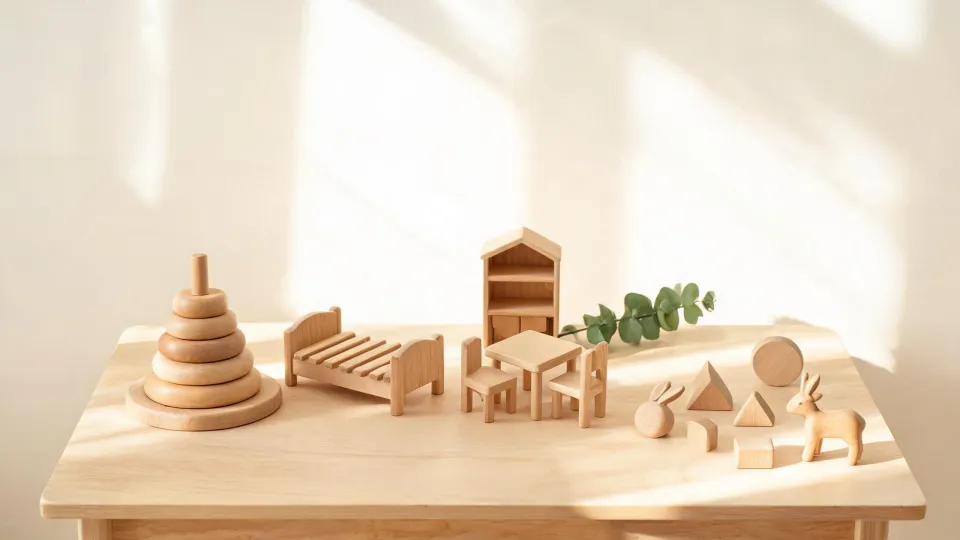
The cardboard box has just landed on the living-room rug. Before you can cut through the tape, your four-year-old has already lifted the lid and found the wooden staircase, running a small finger up every step. The house stands tall and silent, its rooms open and empty, waiting for someone to decide who lives there and what happens first.
When the Cardboard Box Lands on the Living-Room Floor
By the time you cut the tape and lift the lid of the PlanToys Grand Victorian Dollhouse, your child has already forgotten the box. A four-year-old leans in, and the first thing those fingers find is the little wooden staircase—not the furniture, not the roof, but the way up. You have seen this house before, on the PlanToys homepage, where it appears in a Featured Collections row beside a modular dollhouse, beneath promises of creative play. The placement looks like merchandising, yet it says more: this is not a miniature for collectors, it is a setting meant for open-ended play. Standing on your rug, the digital photo becomes an object you can touch, and the question surfaces: will this tall wooden house survive contact with a real child, or is it destined to live on a shelf where it can be admired but not used?
The fast answer would be to call it a dollhouse and stop, but the Grand Victorian does not behave like a static backdrop. Its rooms are open, its surfaces are silent, and its only built-in feature is a clear layout of home. That layout invites a child to lift scenes from their own life and set them down in miniature: the kitchen where food is prepared, the bedroom where someone rests, the staircase that connects the two. Every time they act out one of those scenes, they are doing something more than playing with dolls. They are choosing a beginning, deciding which figure needs to move first, and repeating a sequence until it feels true. It is a process we will watch unfold before the same living-room floor returns at the end.
More Than a Dollhouse: The Work of Pretend
Many adults put dollhouse play under a simple label: static pretend. A child moves figures, says a few words, and walks away, so the toy seems decorative. Watch a four-year-old, though, and the same scene becomes a cognitive workout. When they place the parent figure at the table and the child figure on the stairs, then pause, they are holding two minds open: one downstairs, one upstairs, and a relationship between them that has to be invented. PlanToys says plainly that child development is its focus and that its wooden toys are created to enhance physical and cognitive development through attention to age milestones. That position tells you the dollhouse is not a hobby product but an instrument matched to this stage of growth. The fixed family rooms of the Grand Victorian make mentalizing easier: when the grandmother figure cannot hear the doorbell from her upstairs room, the player must decide how to tell her, and that requires ordering events and imagining what another person knows. What looks like tea-party decoration is, in fact, sequencing plus language work.
The Montessori signal makes the case more concrete. PlanToys' catalog includes a Montessori-Inspired line and labels many groups with phrases about learning, education, and playing creatively. In a Montessori frame, role-play is treated as serious work, because arranging a miniature home and assigning roles requires order, memory, and purpose. Once you see the Grand Victorian inside this brand context, the outdated stereotype of a girl-only dollhouse falls away. The house is an open medium for any child who wants to explore what a family does. It has no recorded voices, no flashing doorbell, and no task to complete, so the child must invent dialogue and plot. Boys often turn the same rooms into rescue plots, moving-day arcs, or urgent cooking before a guest arrives. The open-endedness is not an absence of value; it is the feature that turns a quiet piece of furniture into a playground for language.
Compare that with a plastic counterpart and the mechanism is clear. A plastic house with a ringing doorbell, a flashing kitchen light, and a programmed "time for bed" announcement has already written the plot; the child only presses a button and watches. The Grand Victorian does the opposite. Its stairs move only when a child pushes a figure, its rooms stay quiet until someone supplies a voice, and its fixed layout means a chair cannot live in two places at the same time unless the child explains the contradiction. Those contradictions are where cause-effect thinking appears. Why is the teapot already on the table when the little figure is still upstairs getting dressed? Because the child decided breakfast had to wait. Open wooden rooms do not mean fewer features; they require the child to hold the story in mind, choose a first event, and make the pieces agree. That mental work is exactly what a four-year-old's developing brain is ready to practice.
When Design Philosophy Moves Into Every Room
What does a company founded in 1981 have to do with a Victorian dollhouse? More than you might think. PlanToys began when seven university graduates wanted to bring optimism into the world, and its earliest toys were built on the idea that play should help a child develop. The brand history says it plainly: child development is the focus, and the business rests on three pillars of sustainable material, sustainable manufacturing, and sustainable mindset. Those pillars are not decorative claims; they shape the use of sustainable rubberwood and natural finishes and explain why every production step is reviewed to lower environmental impact. When you lift a Grand Victorian piece, that background predicts a developmental tool first, an heirloom second. A manufacturer that builds its reputation on age milestones is not about to fill its dollhouse with noisy plastic features that drown out a child's own voice.
Go back to the PlanToys homepage and you will see the Grand Victorian Dollhouse inside Featured Collections, with the PlanSpace Modular Dollhouse nearby and slogans such as "Play Creatively Within Your Dream House, Designed by Your Imagination" across the page. That position matters. PlanSpace is described as stackable fun and endless creations, while the Grand Victorian anchors the "Our World" part of the catalog with a complete home. The awards listed on the same page—including the Red Dot Design Award and the Oppenheim Toy Portfolio Gold Seal—show that professional design and play reviews have repeatedly recognized PlanToys. But the more important signal is placement: a Victorian dollhouse is grouped with world-building play, not with display cabinets for collectors. That changes what you expect before you buy. Placing the fixed house next to modular rooms and calling the page a playground for your imagination tells you the Grand Victorian is a starting set, not the end of the story, for stories your child will invent.
This is where the practical choice appears. If you are deciding between the modular PlanSpace line and the Grand Victorian Dollhouse, budget may push you toward the option that promises more play per dollar. The non-obvious judgment is that the fixed house gives a four-year-old more of that play. A modular system invites constant rebuilding—exciting for older children who already invent plots and now want new geography. At four, language expands quickly, and a child needs a predictable map of home before dramatizing it. The same staircase, kitchen, and bedroom seen day after day become trustworthy places for longer stories. If you already own a smaller dollhouse and want to expand, PlanSpace is a natural future purchase. But for a child who has not yet discovered that play can be narrated, the Grand Victorian's permanent rooms are the stronger first investment.
Turning a Wooden House Into a Story Stage
Start with the simplest possible move: place a single figure on the floor by the house—not inside—and wait. If your child has already claimed the staircase, follow their lead instead of introducing your own plot. Say, "The little one is standing at the bottom step. I wonder what he wants." If the child answers with a yawn, that is a story. If they say, "He is waiting for Grandma," the first cause has arrived. Don't correct what seems illogical; four-year-old narrative logic is flexible, and your job is to keep the child the author. As soon as a small action appears—climbing, knocking, reaching for the teapot—name it as an event. "So he climbed the stairs because ... ?" gives the child a because-clause to complete, which is the raw material of cause-effect thinking. Play this way for five minutes and the dollhouse stops being furniture and starts being a stage.
The next layer is to take an ordinary routine and let the dollhouse reenact it in sequence. If your child is attached to breakfast, use the tiny kitchen table: first the parent figure sets two plates, then the child figure comes downstairs, then something interrupts. Ask, "What happened first, breakfast or the knock at the door?" Ordering events is time reasoning. When they retell the sequence to you afterward—"First she woke up, then she ate, then she missed the bus"—they are rehearsing narrative structure while holding a physical model in front of them. You do not need flashcards or a curriculum; the fixed rooms stay constant so the order can change without the setting disappearing. Eventually, the rooms themselves suggest episodes: the bathroom becomes a place for a bath, the bedroom a place to recover, the staircase a place for goodbyes. What children are really doing is turning remembered routines into narrated plots.
The discipline for you as the adult is to follow without taking over. The fastest way to kill an emerging story is to steer: "No, the mother is at work now, so put her in the office." Instead, keep "Then what happened?" and "What did she do next?" as your most used tools. If the child pauses too long, offer one door, not a full storyline: "Did the doorbell ring, or did it get dark outside?" That keeps ownership with the child while giving the narrative a small push. Watch for repetition; a child who retells the same "Grandma goes upstairs and falls asleep" plot every afternoon is doing comprehension work, not showing a lack of creativity. Repetition is how young children consolidate a mental pattern, so let the same story run for days. Your role is to be the audience who asks an interested question, never the director who already knows the answer.
The Little House That Keeps Telling Stories
Months later, the cardboard box from that first afternoon is long gone, but the Grand Victorian has not drifted into a corner. It sits in the living-room spot where you once worried it would be too beautiful to touch; now the space around it has changed. A tiny table has appeared because your child needed a place for afternoon tea; a piece of cloth is now a blanket; the grandmother figure has developed a habit of going upstairs after lunch. Your four-year-old no longer asks permission to play. They simply talk to themselves as they move the figures, and if you pause on your way to the kitchen you can hear the skeleton of a story: first someone arrives, then someone worries, then the teapot solves everything—at least until the next interruption, when the whole sequence begins again.
This is the real reason to choose a fixed wooden house rather than a collector's display piece or a battery-operated cottage. The return comes in the thousandth reenactment, when your child turns the family life they actually know into their first self-made narratives. PlanToys built this house out of a development-focused philosophy, and that philosophy pays off on the living-room floor: a four-year-old explaining why the father figure missed dinner, or why the upstairs neighbor has to be told about the party. The house cannot make a child speak by itself, because its rooms are silent and its scenes stay perfectly still. That stillness is the gift. It hands the storytelling job to the child, turning a beautiful object into a genuine developmental tool. When your own child looks up from the staircase and asks what happens next, the house has done its work—and your answer matters less than the fact that they wanted you to hear it.
The little staircase waits, as it does every afternoon, for whatever story comes next.

Jane Smith
I’m Jane Smith, a senior content writer with over 15 years of experience in the packaging and printing industry. I specialize in writing about the latest trends, technologies, and best practices in packaging design, sustainability, and printing techniques. My goal is to help businesses understand complex printing processes and design solutions that enhance both product packaging and brand visibility.