The Case for PlanToys Sustainable Wooden Toys: Built for Play, Development, and the Planet
Posted on 2026-08-25 by Jane Smith
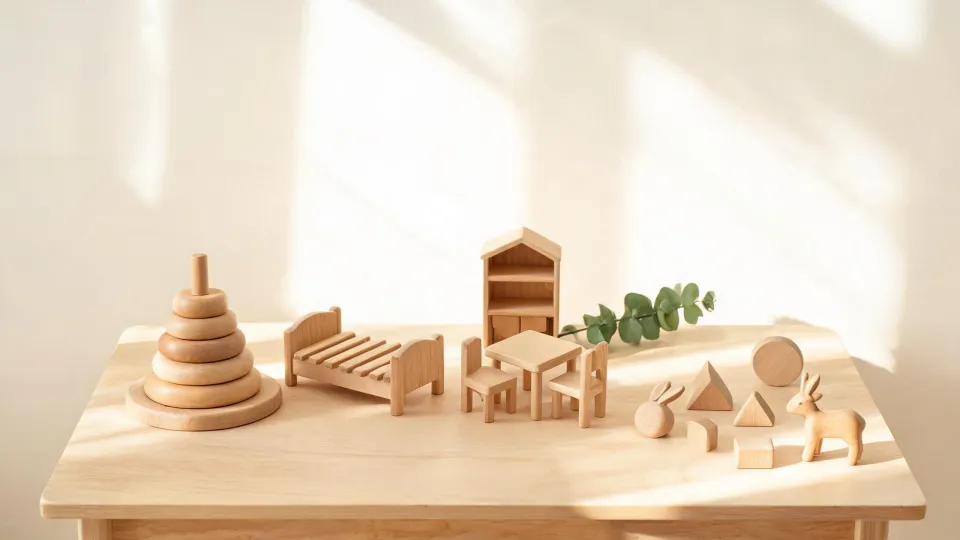
You're standing in the toy aisle, phone in hand, comparing a brightly colored plastic playset with a wooden stacking toy that costs twice as much. The word "sustainable" is printed on the box in soft green letters, but you can't help wondering if it's just a marketing spin. Wooden toys, you've heard, can chip, crack, and bore a child after five minutes. And at this price, it feels like a gamble. This is a common moment for parents who want safe, eco-conscious toys but worry about paying a premium for something that might not last or engage. You pick up the wooden block and feel its weight—smooth, solid, somehow more substantial than the plastic version. The label says "PlanToys." You've seen the name on parenting blogs, but does it really deliver? Your daughter's birthday is in two days, and you're still torn between the practical choice and the one that fits your family's values. You think about the brightly colored plastic toy you replaced last month because a hinge cracked, and the bin it ended up in. This wooden block feels like it could survive a decade of drops and still look good on the shelf.
The Birthday Gift That Made a Parent Reconsider Wooden Toys
You're in the toy aisle, phone in hand, comparing a plastic playset with a wooden stacking toy that costs twice as much. The word 'sustainable' is printed on the box in soft green letters, but you wonder if it's just a marketing spin. Wooden toys, you've heard, can chip, crack, and bore a child after five minutes. At this price, it feels like a gamble. It's a common moment for parents who want safe, eco-conscious toys but worry about paying a premium for something that might not last or engage. You pick up the wooden block and feel its weight—smooth, solid, somehow more substantial than the plastic version. The label says 'PlanToys.' You've seen the name on parenting blogs, but does it really deliver? Your daughter's birthday is in two days, and you're torn between the practical choice and the one that fits your family's values. You think about the plastic toy you replaced last month because a hinge cracked, and the bin it ended up in. This wooden block feels like it could survive a decade of drops and still look good on the shelf.
But what if the label was backed by decades of proof? Consider this: back in 1981, seven university graduates in Thailand started PlanToys with a mission to spread positivity through play. The very first product they launched, the Geometric Sorting Board, is still on sale today. That's not a limited-edition nostalgia item; it's a toy that has been in continuous production since the company's first year. If a wooden toy can survive decades of changing trends and safety standards, maybe there's more to it than a marketing claim. So the question becomes: can a toy that has been around since 1981 also be the right choice for your child in 2026? The answer, we'll see, lies in how the company weaves sustainability and child development into every piece. When a product outlives three decades of fads, it earns a second look from even the most skeptical parent.
From Sawdust to Playroom: The PlanWood Advantage
So what exactly sets PlanToys apart? The company calls its approach the "Sustainable Way," which rests on three pillars: sustainable materials, sustainable manufacturing, and a sustainable mindset. In practice, this means they look at every step of production, from the raw material to the finished block, and ask how to reduce environmental impact. One of their most striking innovations is PlanWood, a material created from leftover sawdust that would otherwise be discarded. Instead of sending that waste to a landfill, PlanToys presses it into sturdy, workable boards for their toys. For a parent, this changes the meaning of "green": it's not a vague promise but a visible manufacturing decision. You can see the difference in the grain and feel—it's dense, warm, and built to last through many playrooms. This is a material that tells a story: every toy begins with a problem (waste) and a solution (reuse), and that story goes home with your child.
That commitment extends beyond a single material. PlanToys describes its green business practices as a core strength: "We use leftover sawdust to create a new material called PlanWood," the company says, and then goes further by rethinking how each toy is manufactured. Their factories in Thailand are designed to minimize waste and energy use, and the company intentionally considers every single step of production to lower its environmental footprint. With nearly four decades of such mindful practice, these aren't just eco-slogans—they're engineering choices baked into the product. For you as a buyer, this means the price you pay reflects a real effort to reduce harm, not just a sticker that says "natural." It's the kind of transparency that makes a premium feel justified, because you can trace the logic from sawdust to sorting board, from factory floor to playroom floor.
Designed for Development, Not Just Playtime
Sustainability is only half the story; the other half is how these toys support your child's development. PlanToys says its design and production process focuses on child safety and age milestones. In practice, that means each toy is tested against real developmental needs—whether it's grasping, sorting, balancing, or imagining. The result isn't just a pretty object; it's a tool that helps build fine motor skills, spatial reasoning, and problem-solving. For a parent comparing options, this switches the question from "Is it eco-friendly?" to "Is it good for my child's development?" And PlanToys' answer is woven into the materials, shapes, and mechanisms of every piece. You're not just buying a block; you're buying a small piece of developmental scaffolding that adapts as your child masters new skills, offering fresh challenges without requiring a new purchase.
A concrete example makes this tangible. The Geometric Sorting Board, which PlanToys launched in its very first year of business, is still on the market today. That's a strong signal that a well-designed educational toy doesn't become obsolete. The same logic runs through the current catalog—Montessori-Inspired Collection and Blocks & Construction series are built around open-ended play that grows with a child, from simple stacking to complex structures. When a toy can serve a toddler and a preschooler differently, it's not just a purchase; it's an investment in developmental stages. PlanToys' own positioning as "sustainable wooden toys for child development" is visible in these collections, giving you a clear map from product to purpose. You can watch a child progress from holding a block to using it as part of a story—that's the kind of play that builds executive function and creativity.
Wood vs. Plastic: A Buyer's Honest Compare-and-Decide
Now comes the honest part: the cost. A PlanToys wooden set often carries a higher price tag than a similar plastic toy from a big-box store. That gap makes you pause. But when you line up the real dimensions of the choice, the picture shifts. Plastic toys are usually cheaper upfront, but they tend to break, lose pieces, or get abandoned once the novelty fades. Wooden toys like PlanToys are built to endure rough play, and they often double as decorative items that fit your home aesthetic. Cleaning is simpler too—a damp cloth wipes down most surfaces. The environmental impact is also starkly different: plastic toys rarely break down, while sustainably sourced wood can be recycled or biodegrades naturally. So the comparison isn't just price vs. price; it's durability, learning value, and lifecycle cost. A $30 plastic toy that lasts six months costs more per month of play than a $50 wooden toy that lasts for years and can be passed down.
The evidence backs this up. PlanToys has collected international recognition that most toy brands only dream of—Red Dot Design Award in Germany, Oppenheim Toy Portfolio Gold Seal, Parents' Choice Gold Award, and more. These are not vanity trophies; they're independent evaluations of design, safety, and play value. For example, the Red Dot jury called the Ramp Racer "sturdy and elegantly designed," noting that the contrast between the wooden track and colored cars helps children follow speedy vehicles. When experts and parents alike repeatedly award a brand, it signals a level of quality you can trust. It's the kind of third-party validation that turns a hesitant shopper into a confident one, because you're not relying on the brand's own advertising alone. Independent awards give you a shortcut to knowing that the toy will be both engaging and safe, which is exactly what a parent needs when deciding between two very different price points.
So what's the practical rule? Don't just compare price tags; compare what you get for the long run. Ask if the toy is built to last through multiple children, if the material will hold up to years of play, and if the company's values align with yours. PlanToys even has "Spring Favorites under $25" to ease into the wooden-toy world without a big commitment. The point is not to spend more for the sake of it, but to buy toys that hold value—both for your child's development and for the planet. That's the framework that turns a purchasing dilemma into a clear decision: you're paying for durability, learning payoff, and a smaller environmental footprint, not just a label. When you run the numbers on cost-per-play and environmental impact, the wooden choice often wins, even if the sticker price is higher.
The Wrapped Gift on the Playroom Floor
Back in the toy aisle, you decide to take a chance on the wooden sorting board—the one that's been selling since 1981. That evening, you watch your child sit down with the smooth shapes, turning them over and fitting them into place. There's no electronic buzz, no flashing lights, just the quiet click of wood on wood. Your child doesn't reach for the plastic toy that came in the party bag; they keep coming back to the blocks, building a tower, then a wall, then a story. This is the moment when the investment starts to feel worth it—not because of a certificate, but because of how your child plays. The toy doesn't just occupy; it invites curiosity, concentration, and small moments of triumph. You see the same toy holding their attention for twenty minutes at a stretch, and you realize it's not just a piece of wood; it's a kind of learning that feels like play.
The verdict isn't that every wooden toy is superior, or that you should replace your whole toy box overnight. It's that PlanToys makes the choice easier by pairing sustainability with child development in a tangible way. Their Sustainable Way—materials, manufacturing, and mindset—are not abstract ideals; they show up in PlanWood's sawdust origin, in safety-focused design, and in toys that endure for generations. When you weigh the price against the durability, the learning value, and the environmental cost, the balance tips in a quiet, confident direction. You're not just buying a toy; you're buying into a system that treats play as both a developmental tool and a stewardship promise. And that, as the scene on your playroom floor proves, is a trade worth making.

Jane Smith
I’m Jane Smith, a senior content writer with over 15 years of experience in the packaging and printing industry. I specialize in writing about the latest trends, technologies, and best practices in packaging design, sustainability, and printing techniques. My goal is to help businesses understand complex printing processes and design solutions that enhance both product packaging and brand visibility.