Seven Graduates, One Rubber Tree: How PlanToys Makes Sustainable Wooden Toys
Posted on 2026-08-19 by Jane Smith
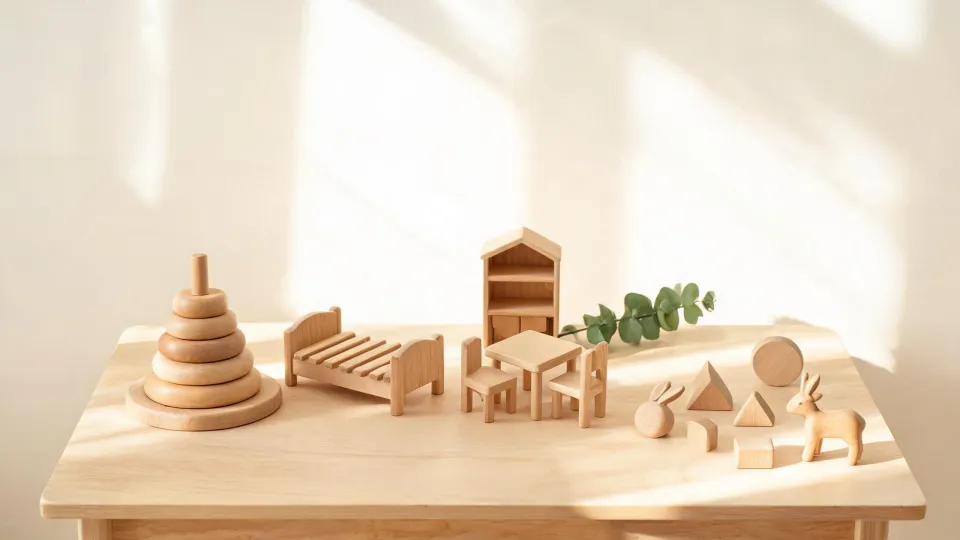
In 1981, seven young university graduates in Thailand crowded into a modest workshop, their notebooks filled with sketches of wooden toys and a bold question: could a toy company be built around the idea of giving back to the world? One of them, Vitool Viraponsavan, argued that play should be both joyful and responsible. They chose rubber wood, a renewable byproduct of the latex industry, as their material, and their first product, the Geometric Sorting Board, launched that same year and is still sold today. What those graduates did not yet know was that this small beginning would grow into PlanToys, a brand with a global reach, and that their early commitment to avoiding waste would later inspire PlanWood, a material made from leftover sawdust. That founding scene, with its mix of idealism and practical craft, holds the key to everything the company does now.
Seven Graduates and a Rubber Tree: Where PlanToys Began
In 1981, seven university graduates gathered around a worn wooden table in Thailand, their voices overlapping as they argued and laughed about a shared mission: to infuse the world with positivity through play. Vitool Viraponsavan, the most persuasive voice in the room, would eventually transform that mission into PlanToys, a company that now reaches families across Asia, America, Europe, and Australia. Their first creation, the Geometric Sorting Board, debuted in that very first year and remains on sale today, a quiet testament to a design so timeless that it never needed a redesign. The founders were not chasing a trend; they were building a philosophy. They envisioned toys that would last beyond a child's fleeting interest, made from materials that would not disappear from the forest. In that sense, the scene was less about manufacturing and more about stewardship. The rubber tree, with its renewable sap and strong wood, would become a central character in this story, though these young graduates might not have fully realized how far that vision would carry them.
But for a parent browsing online toy stores today, that founding story often feels distant. You see a wooden toy that costs more than a similar plastic one, and you wonder if the premium is worth it. 'Sustainable' sounds good, but does it mean the toy is less durable, less safe, or less educational? Many families assume that eco-friendly playthings require a trade-off – that choosing wood over plastic means giving up on bright colors, sturdy construction, or the kind of features that keep a child engaged for more than a week. That assumption is understandable, given how often 'green' products are positioned as lifestyle choices rather than real playthings. It's easy to imagine a wooden block set sitting untouched in a corner while a plastic dinosaur takes center stage. But this misconception is exactly what needs a closer look. If sustainability were just a marketing label, it would not matter much. Yet when a brand builds its entire manufacturing process around that idea, the toys themselves may be more thoughtfully designed, not less. The real question is whether the premium you pay for a wooden toy translates into a better outcome for your child – and that requires looking past the label.
The reality, as PlanToys' own story shows, is that sustainability and child development are not competing priorities – they are two sides of the same design process. Since the beginning, the company has described its approach as a 'Sustainable Way' built on three pillars: sustainable materials, sustainable manufacturing, and a sustainable mindset. That means the rubber wood is harvested responsibly, the production line minimizes waste, and every toy is designed with a child's age milestones in mind. Consider the innovation called PlanWood, which turns leftover sawdust into a new material for toys. That breakthrough is not just a recycling trick; it is a way of thinking that regards waste as a design problem rather than an inevitability. When a toy emerges from this system, it is not simply a wooden thing – it is a product of a philosophy that says the way we make a toy matters as much as what the toy does. So the next question is: how did a group of 1981 graduates turn this vision into a global reach?
From a Shared Mission to a Global Reach
The seven graduates who met in 1981 did not simply want to launch a product line; they wanted to prove that business could be a force for good. Vitool Viraponsavan, the strongest voice in the group, carried that conviction into the company's identity. PlanToys would not be a toy maker that happened to care about sustainability; it would be a sustainable company that made toys. Today, the brand operates globally, but the mission remains the same: to infuse the world with positivity, creativity, and a passion for sustainability. The Geometric Sorting Board, still on sale after all these years, shows how a design can stay relevant across generations. It also hints at the company's belief that a toy's value is not in its novelty but in its ability to grow with a child. This is why the origin story matters more than a nostalgic anecdote – it explains why PlanToys makes the choices it makes, from the wood it sources to the ages it designs for.
From its Thai roots, PlanToys has grown into an international company, bringing optimism, creativity, and a passion for sustainability to communities everywhere. This global presence is not just about shipping products; it is about sharing a philosophy. The company's message that 'Better Kids, Better World through Sustainable Play' resonates across cultures, as parents everywhere seek toys that are both safe and meaningful. As PlanToys grew, it carried the original mission forward, adapting its offerings to meet the developmental needs of children in different markets. Its international reach also gives it a platform to influence how toys are made, setting an example for other manufacturers. But global expansion brings challenges: how do you maintain quality and consistency when your forests are on one side of the world and your customers on the other? PlanToys answers by keeping production in Thailand, where it controls every step of the process. This centralization preserves the tight connection between material, manufacturing, and mindset that defines the brand, ensuring that a child in Australia plays with a toy made under the same strict standards as one in Thailand.
The Sustainable Way: Material, Manufacturing, Mindset
The first pillar of PlanToys' 'Sustainable Way' is sustainable materials. The company uses rubber wood, a byproduct of the rubber industry. Rubber trees are typically harvested after about 25 years, when their latex production declines, and PlanToys gives this wood a second life in toys. The material is sturdy, fine-grained, and naturally warm to the touch. PlanToys also uses water-based dyes and non-toxic glues, ensuring that what reaches a child's hands is free from harmful chemicals. But sustainable material is not just about the starting point; it is also about what happens to every scrap. The sawdust from shaping the wood is not thrown away – it becomes the foundation for PlanWood, a composite that can be molded into forms that would be difficult to carve from solid wood. This approach means more of the tree is used, and less ends up in a landfill. For a parent, this pillar translates into a toy that is not only safe but also honest: what you see is what the company promises, with no hidden shortcuts.
Sustainable manufacturing, the second pillar, is where PlanWood becomes more than a novelty. When PlanToys shapes wood, it generates sawdust. Rather than sweeping it away as waste, the company collects that sawdust and presses it into PlanWood, a versatile material with several advantages over solid wood. First, it uses every part of the tree, so no material goes to a landfill. Second, PlanWood can be formed into complex shapes with smooth, rounded edges, making toys safer and more tactile. Third, the process requires less energy than refining virgin plastics. The factory in Thailand is designed to minimize environmental impact at every step, from water recycling to energy efficiency. This is not a single green initiative; it is a closed-loop system where production byproducts become raw materials. The result is a toy that carries a lower environmental footprint from tree to toy box, without compromising on quality or play value. PlanToys calls this approach a 'Sustainable Way' because it treats the entire production process as an ecosystem, where each step feeds the next.
A sustainable mindset, the third pillar, links the factory floor to the playroom. For PlanToys, sustainability is not a department or a certification; it is a lens through which every product is viewed. This mindset shows up in decisions like avoiding small parts that can detach, using rounded corners that protect toddlers, and selecting colors that stimulate without overwhelming. It also means considering a toy's entire lifecycle: how it is made, how it is used, and what it teaches. The company's commitment to child development is part of this same mindset. By focusing on child safety and age milestones during design, PlanToys says its wooden toys enhance both physical and cognitive development. The sustainable mindset therefore is not just about the planet; it is about the child. A toy that is safe for the earth is also safer for the child who chews on it, and a toy that is designed for a specific age is more likely to hold a child's interest and support growth. This is the non-obvious connection that separates PlanToys from brands that treat sustainability as a badge rather than a design principle.
Why Child Development Is a Design Constraint
At PlanToys, child development is not an afterthought; it is a design constraint. The company states that by focusing on child safety and age milestones during design and production, their wooden toys enhance both physical and cognitive development. This means that a toy's size, shape, and mechanical properties are chosen to match what a child's hands and mind can handle at each stage. For example, a teething ring is not just a circle of wood; it is sized for a baby's grip and made from non-toxic materials that can be mouthed safely. A puzzle for a preschooler uses knobs sized for small fingers, encouraging fine motor skills without frustration. The emphasis on safety is visible in the absence of sharp edges and the use of water-based paints. PlanToys also categorizes its toys by developmental domains, such as mathematics and literacy, making it easier for parents to choose toys that support specific skills. This developmental focus is why the brand's sustainability story is incomplete without the child: the same design process that minimizes waste also maximizes play value, because safety and age-appropriateness are built in from the start.
This developmental focus translates into a diverse product line. PlanToys offers Montessori-inspired collections, blocks and construction sets, learning and education toys, and role-play items. Many of these are available under $25, making sustainable play accessible to a wider range of families. The Montessori-inspired collection, for example, emphasizes self-directed activity and hands-on learning. Blocks and construction sets encourage spatial thinking and creativity. Learning and education toys target specific cognitive skills like counting and letter recognition. Role-play sets, such as a fruit basket or a parking garage, let children act out real-world scenarios, building language and social skills. Parents and experts have praised specific toys for their sturdiness and thoughtful design. The Ramp Racer, with its wooden track and colored cars, is easy for children to follow, while the Jumping Acrobat reduces a toy to its essentials, inviting focused play. These examples show that sustainability does not limit play value; it often enhances it, because the materials invite touch and imagination. Whether you're looking for a first block set or a Montessori-inspired activity, the range offers something for every age and interest.
What Award-Winning Recognition Tells a Modern Buyer
External recognition helps a buyer evaluate whether a brand's claims are credible. PlanToys has accumulated an impressive list of awards, including the Red Dot Design Award from Germany, the Spiel Gut (Good Toy) award, and the Oppenheim Toy Portfolio Gold Seal from the USA. It has also received Parents' Choice Gold Awards, a Good Toy Guide Gold Award in the UK, and a Belgian Toy of the Year title. These are not obscure accolades; they come from independent juries that test toys for design, safety, and play value. Winning across multiple countries and categories suggests that PlanToys' approach works in practice, not just in theory. Reviewers have praised specific products for their sturdiness and child-friendly design, reinforcing the brand's focus on safety and durability. For a shopper, awards are a useful shortcut – they say that experts have already scrutinized the toys and found them worthy. But awards are not the whole story; they point to something deeper about the brand's consistency in delivering on its promises.
So what should a modern buyer conclude? The evidence shows that PlanToys' sustainability is genuinely embedded in its manufacturing process, not tacked on as a marketing afterthought. The company's three-pillar approach – material, manufacturing, and mindset – creates a closed loop where sawdust becomes new toys and where child development constraints shape every design decision. This integration is the reason PlanToys keeps winning awards and why parents keep coming back. For a family weighing the premium of wooden toys over plastic, the verdict is that the higher price buys more than a green label; it buys a product designed to support a child's growth while reducing environmental harm. Whether you choose a simple block set or a Montessori-inspired activity, you are investing in a philosophy that treats toys as both educational tools and stewards of the planet. The 1981 founding story, with its seven graduates and a shared vision, has become a working model for how responsible manufacturing and quality play can coexist. When you see a PlanToys product, you are seeing the result of that integration – and that is a standard worth paying for.
From seven graduates and one rubber tree to a global brand, PlanToys has shown that the sustainable way and the developmental way are, in the end, the same way.

Jane Smith
I’m Jane Smith, a senior content writer with over 15 years of experience in the packaging and printing industry. I specialize in writing about the latest trends, technologies, and best practices in packaging design, sustainability, and printing techniques. My goal is to help businesses understand complex printing processes and design solutions that enhance both product packaging and brand visibility.