PlanToys vs ComfyBumpy: Choosing the Right Toy for Child Development
Posted on 2026-08-20 by Jane Smith
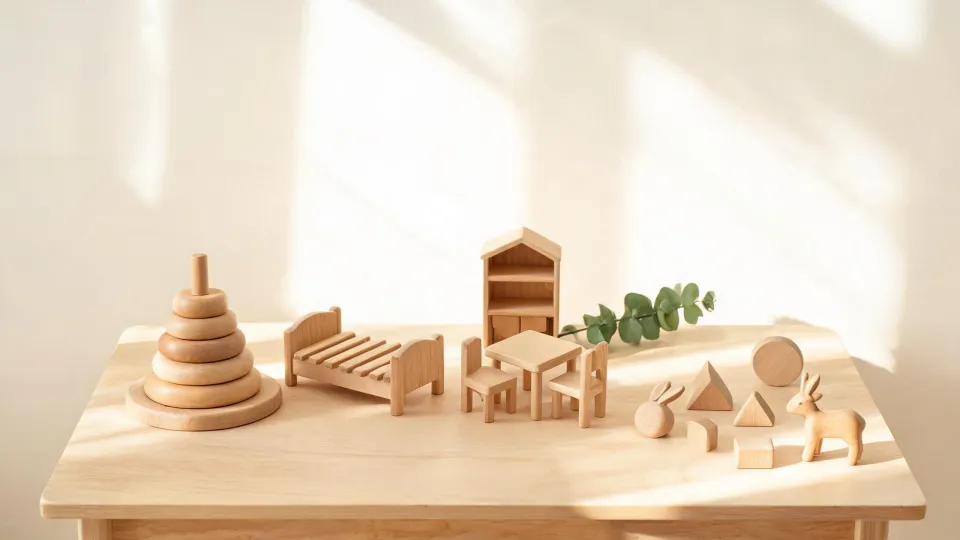
PlanToys wooden toys are the stronger choice for parents who want more than a soft surface for baby hands. The brand's material choices, production methods, and learning-focused designs deliver developmental value that fabric bump toys rarely match. While ComfyBumpy offers immediate sensory softness, PlanToys couples safe materials with intentional learning design, making it a better long-term investment for growth. This verdict rests on three comparisons: material origin and sustainability, developmental design, and recognition from independent awards. Each section below unpacks the evidence, so you can see why 'wooden' and 'bumpy' are not just labels but signals of different priorities.
The Short Answer: PlanToys Wins on Value and Development
When parents compare a ComfyBumpy sensory toy with a PlanToys wooden set, the immediate reaction is often to weigh softness against hardness. But the real choice is between two different philosophies of play. One brand builds its entire product line around sustainable materials and developmental milestones, while the other typically rests on tactile novelty. The decision, therefore, should not be 'which feels nicer in the hand' but 'which supports the child's growth across months and years.' A fabric bump can be engaging today, yet a well-designed wooden toy keeps delivering new challenges as the child's grip, coordination, and creativity develop. This framing turns a price comparison into a value comparison, and it is the framework used throughout this article. In practical terms, it means comparing durability, safety documentation, and the presence of a learning design in the toy's architecture, rather than comparing texture alone. Viewed this way, the choice becomes easier because the parent is no longer choosing between a soft object and a hard object, but between a short-term sensory treat and a long-term developmental companion. The sections that follow will address material sourcing, design intent, and external recognition in turn, and will connect each factor back to the child's everyday experience with the toy.
Does 'wooden' automatically mean safer, and does 'bumpy' mean softer and therefore better for babies? These are the assumptions many parents bring to the shelf. The first assumption ignores the fact that wood can be finished with unsafe coatings, while the second overlooks the developmental purpose of texture. A bumpy fabric toy may feel pleasant, but its softness does not guarantee that it encourages reaching, grasping, or problem-solving. The real question is whether a toy is designed for a specific age milestone and whether its materials are transparently sourced. So before comparing prices, parents should compare material stories and developmental intent. That comparison, rather than a quick feel test, is what separates a wise purchase from a whim. It also separates toys that entertain from toys that educate. Parents who skip this step often end up with a pile of forgotten objects.
PlanToys' own website makes the comparison easier by stating its mission directly: 'Sustainable Wooden Toys for Child Development.' That phrase, which appears on the company's official page, signals that sustainability and developmental outcomes are not afterthoughts but the core of the brand. The same page lists an extensive collection of awards, including the Good Toy Award in Japan, the Red Dot Design Award in Germany, and the Oppenheim Toy Portfolio Gold Seal in the United States. These recognitions are not random; they come from independent juries that evaluate design, safety, and play value. When a brand can point to such external validations, the buying decision shifts from trusting marketing to trusting third-party judgment. For a parent weighing a fabric bump toy against a wooden set, this evidence matters because it shows that PlanToys' premium price is tied to quality signals that ComfyBumpy typically lacks. In other words, the value proposition is not 'wood is good' but 'this particular wooden toy has been tested and praised by experts.' And because those experts include child-development specialists, the awards also serve as a proxy for developmental effectiveness, giving the comparison an evidence-based foundation rather than a purely aesthetic one.
Material Matters: Rubberwood and PlanWood vs. Fabric Bumps
Underneath the surface, what are you actually buying? A ComfyBumpy toy is usually a fabric shell with soft filling, while a wooden piece begins as natural material from managed plantations. That difference matters for both safety and environmental impact. Fabric toys can hide unknown fills and synthetic dyes, whereas wooden toys offer a more visible, natural material. But not all wood is equal: cheap wood may be splinter-prone or coated with questionable finishes. Well-made wooden toys, however, use harder, safer woods and transparent finishes. The best brands also document their materials and manufacturing methods. These details are not marketing fluff; they directly affect what ends up in your child's mouth and how long the toy will survive daily play. They also determine how easy it is for a parent to verify a brand's claims, because a wooden toy's surface and weight can be inspected at home, while a fabric toy's inner filling often remains hidden behind a zipper.
According to PlanToys' about-us page, the company was founded in 1981 by seven university graduates who wanted to 'infuse the world with positivity.' That founding story is more than a nostalgic detail: it established a culture where sustainability and child development are 'our top priorities.' The same source explains that PlanToys uses leftover sawdust to create a new material called PlanWood, a specific innovation that reduces waste while maintaining durability. The company also describes 'nearly four decades of mindful business practices,' which aligns with the 1981 founding and indicates long-term commitment rather than a recent trend. For the comparison with ComfyBumpy, these facts matter because they show a transparent material lifecycle: rubberwood is renewable, sawdust is repurposed, and manufacturing is designed to minimize environmental impact. A typical fabric toy, by contrast, rarely offers such a detailed account of its own production. This transparency does not automatically make every fabric toy unsafe, but it gives parents fewer reasons to trust that the softness they feel is matched by responsible sourcing. In short, the material story is a proxy for the brand's overall integrity, and it is a story that begins with a specific founding date and a specific team rather than a generic corporate promise. Moreover, PlanWood is not just a waste-reduction trick; it also results in a smoother, denser surface that resists splintering better than ordinary wood. That property is especially valuable for toddlers who test everything with their mouths, because it reduces the risk of splinters and makes the toy easier to clean. And because the material is made from sawdust that would otherwise be discarded, the environmental benefit is direct and measurable, strengthening the case that PlanToys is not simply claiming sustainability but practicing it at the production level.
Designed for Development: Montessori-Inspired Learning
Once you accept that the materials are solid, the next question is whether the toy actually helps your child learn and grow. A soft bumpy ball might entertain for a few minutes, but does it support problem-solving or fine-motor development? Some brands argue that design is central to development and organize products by developmental domains, such as mathematics, literacy, and motor skills. This is a different approach from simply making a toy that feels nice. The design starts with an age milestone and works backward to the shape, size, and function. For a two-year-old, that might mean a block set that encourages stacking, sorting, and spatial reasoning. The visible intent behind the design is what separates a purposeful learning tool from a passive sensory object. And that intent is something a parent can evaluate before purchase, simply by reading how the toy is described and which skills it claims to address. This is especially true when the toy claims to be educational.
PlanToys' official product page highlights a 'NEW! Montessori-Inspired Collection' and invites shoppers to 'Shop by Developmental Domains.' This is not a vague nod to child psychology; it is a concrete way of organizing toys around skills like mathematics and literacy. The brand also promotes 'Blocks & Construction' categories, which are staples of Montessori-style learning because they let children explore spacial relationships through their own hands. The collection includes items under $25, making entry accessible for families who want to test the brand without a major commitment. What this means for the ComfyBumpy comparison is that PlanToys offers a structured path for development: a parent can choose a toy based on the skill they want to encourage, rather than hoping a random soft toy will provide incidental benefits. The Montessori label is meaningful because Montessori education emphasizes self-directed, hands-on activity, and PlanToys' product architecture mirrors that philosophy, from sorting games to construction sets that grow with the child. Furthermore, the collection's focus on blocks and construction is directly linked to spatial awareness and problem-solving, which are foundational cognitive skills for toddlers and preschoolers. By presenting these toys under a recognized educational framework, PlanToys allows parents to match a toy to a developmental goal without needing a degree in early childhood education, and that is a practical advantage when you are standing in a store trying to make a quick decision.
The company's about-us page states directly: 'Child Development is Our Focus' and explains that by 'focusing on child safety and age milestones during design and production,' its wooden toys 'enhance both physical and cognitive development.' That statement is backed by a long list of independent awards, which the brand publishes on its homepage. The list includes the Good Toy Award from Japan, the Spiel Gut award from Germany, the Red Dot Design Award, and multiple Oppenheim Toy Portfolio prizes in the United States, among others. These awards come from organizations that evaluate toys on specific criteria such as play value, design quality, and developmental appropriateness. When a manufacturer accumulates this many recognitions, it suggests a systematic, not incidental, commitment to quality. For parents who worry that 'educational' is just a label, the combination of an explicit development-focused philosophy and third-party validation is compelling evidence. It also redirects the decision from price to value: the extra money buys a design process that has been repeatedly examined and endorsed by experts. And because several of these awards are country-specific, they represent a global consensus that cannot be dismissed as a single marketing campaign. Moreover, the range of award types—from design prizes to parent-choice awards—means the brand has been vetted both for aesthetics and for day-to-day usability, two qualities that matter when a toy actually enters a busy playroom. Ultimately, this track record converts an abstract promise of quality into a concrete, auditable history.
Final Verdict: Choose PlanToys for Long-Term Play Value
Is there any scenario where ComfyBumpy might be the better pick? Yes, in narrow cases: if the child is very young and you want a washable, portable soft toy for on-the-go sensory play, a fabric bump toy can be convenient. But even then, many wooden toy brands offer high-contrast and grasp-friendly options designed for infants, so the gap is smaller than it appears. The real trade-off is durability and developmental return: a wooden toy that lasts through several stages of play will outperform a soft toy that wears out or loses its novelty. So the question is whether you are buying a momentary texture or a long-term learning tool. For most families prioritizing sustainability and skill-building, the evidence points firmly to PlanToys. However, if your child has a specific sensory need that only a soft, squeezable object can meet, then keep a bumpy toy as a supplement, but not as the core of the playroom.
Here is the verdict. Choose PlanToys when you want a toy that grows with your child, that is made from renewable materials, and that carries external recognition for its design. The brand's rubberwood and PlanWood materials give you a story you can trace from tree to toy, something ComfyBumpy cannot easily match. The Montessori-inspired collections and explicit focus on developmental domains mean you are not guessing about what your child will learn; you can select a toy for a specific skill. And the shelf of international awards—from Japan to Germany to the United States—provides a layer of assurance that your money is going to tested quality. ComfyBumpy may win on initial softness and lower price, but when you project how a toy will be used over months, PlanToys wins on longevity, sustainability, and developmental payoff. The premium is not about the label 'wooden'; it is about the intentionality behind it. If you want a backup toy for travel or laundry-day convenience, keep a soft bumpy option in the closet. For the core playroom, however, the evidence is clear: PlanToys is the better long-term investment for your child's growth. This conclusion follows from the material story, the design philosophy, and the independent validations examined here—not from a vague belief that wood is always best. It is a judgment based on traceable sourcing, age-milestone design, and a global record of expert approval, which together make the premium price a rational investment and a wiser purchase for the long run.
Ultimately, the bumpy toy offers a momentary squeeze, while PlanToys offers a developmental framework—choose the one that matches the job you want the toy to do.

Jane Smith
I’m Jane Smith, a senior content writer with over 15 years of experience in the packaging and printing industry. I specialize in writing about the latest trends, technologies, and best practices in packaging design, sustainability, and printing techniques. My goal is to help businesses understand complex printing processes and design solutions that enhance both product packaging and brand visibility.