PlanToys vs ComfyBumpy: Which Wooden Toys Build Real Play Value?
Posted on 2026-08-31 by Jane Smith
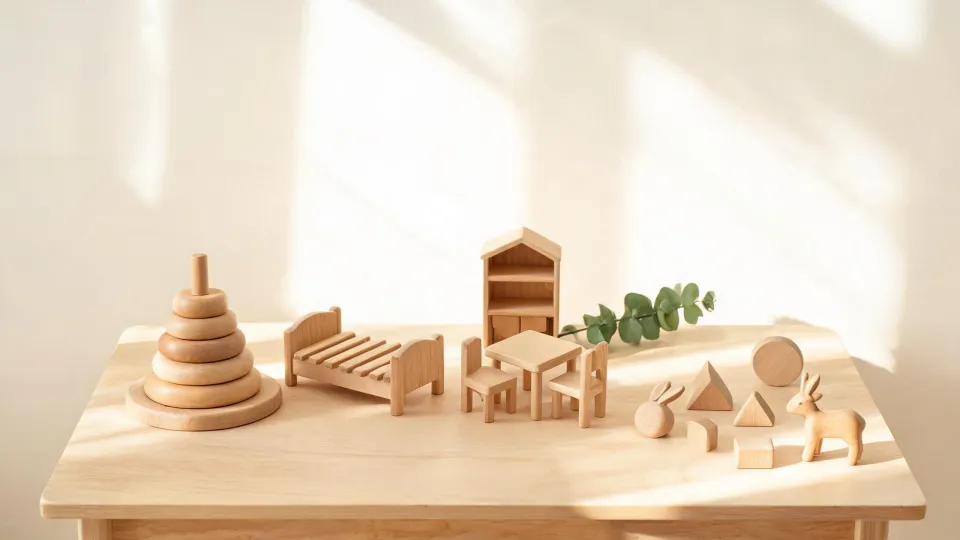
When you put ComfyBumpy and PlanToys wooden toys side by side, they may look similar, but they are built on very different promises. For most families, PlanToys is the stronger choice because it combines a transparent sustainability system with toys that are engineered to follow your child's development. ComfyBumpy offers a lower entry price, but it does not show the same depth of material sourcing or design intent. If you are willing to invest a little more, PlanToys gives you a toy that lasts longer, plays better, and supports a greener manufacturing loop. If your budget is very tight, a ComfyBumpy starter set can get you started, but plan to upgrade as your child grows.
The Bottom Line on ComfyBumpy vs PlanToys
To make the comparison concrete, think about what you are actually paying for when you buy a wooden toy. A ComfyBumpy set may look similar to a PlanToys piece on the shelf, but the two brands are built on different promises. PlanToys aims at child development and sustainability as its core mission, not as an afterthought. The company has built its identity around those two pillars for as long as it has existed, and that focus shows in how it designs each product. ComfyBumpy, by contrast, positions itself as a low-cost entry point for families who want wooden toys without the premium price tag. The trade-off lies in how much you trust the manufacturing behind each piece.
PlanToys' official About Us page reinforces this distinction. The company describes its 'Sustainable Way' as a fusion of sustainable materials, manufacturing methods, and mindset, and it explicitly says that sustainability and child development are top priorities. That is not a marketing slogan; it is operational. The Geometric Sorting Board's longevity—launched in 1981 and still on sale today—shows that PlanToys does not discard designs when a new trend appears. Instead, it refines a product until it meets developmental benchmarks. For you, this means a PlanToys purchase is more likely to hold its value, both in terms of resale and in terms of how many years your child will actually play with it. The material and design choices are not random; they are tied to safety and age milestones.
So the core axis of comparison is now clear: PlanToys competes on sustainability and child-development design, while ComfyBumpy competes on price. But how do those differences show up in the materials themselves? You might assume that any wood is eco-friendly, but the manufacturing process matters more than the label. A quick visit to PlanToys' own homepage reveals a catalog organized around developmental domains and Montessori-inspired sets—a signal that the company thinks about materials in the service of child development, not just decoration. ComfyBumpy's catalogs, by contrast, tend to group toys by theme rather than by developmental science, which makes it harder to know what you are actually getting. That is where PlanToys' PlanWood technology changes the picture, and it is worth examining before you make a decision. In the next section, we will look under the hood at how each brand sources and transforms its materials.
How the Materials and Manufacturing Really Differ
Have you ever wondered why a wooden toy from one brand feels smoother and more durable than another, even when both are made of wood? The answer often lies in the manufacturing process. Many budget brands use whole wood cut from trees, then paint it with whatever coating keeps costs low. PlanToys, in contrast, starts with rubberwood trees that no longer produce latex, and it does something unusual: it takes the leftover sawdust from cutting and pressing that wood and compresses it into a new material called PlanWood. That process is not just clever recycling; it changes the properties of the toy. PlanWood can be molded into shapes that solid wood cannot achieve, and it reduces waste at the source.
PlanToys' description of its 'Green Business Practices' directly demonstrates this. The company states, 'We use leftover sawdust to create a new material called PlanWood,' and it explains that it 'intentionally considers every single step of production in order to minimize environmental impact.' That is a mechanistic difference, not a cosmetic one. Because the sawdust is a byproduct, PlanToys does not need to harvest additional trees for each toy. It also means the material is consistent in density, which gives the toys a uniform weight and strength that you can feel when you hold them. For a child who mouths toys or throws them, this consistency makes PlanToys pieces less likely to splinter or crack than hastily cut budget alternatives.
PlanToys also ties its materials back to child safety and development. In its official materials, the company says it focuses on 'child safety and age milestones during design and production' and that its toys 'enhance both physical and cognitive development.' This is part of its 'Sustainable Way' three-pillar model—sustainable materials, manufacturing, and mindset. So when you see a PlanToys label, you are not just getting wood; you are getting a material that was designed with a specific developmental purpose in mind. ComfyBumpy might also use wood, yet it lacks the transparent manufacturing story that lets you easily verify non-toxic coatings or responsible harvesting. That is a meaningful gap when you are handing the toy to a toddler.
What Development-Focused Design Changes for Your Child
Look at PlanToys' product catalog and you will notice that it is curated around developmental domains, not just random playthings. The official site organizes items under categories like 'Blocks & Construction,' 'Learning & Education,' and 'Montessori-Inspired Collection,' and it even offers a 'Shop by Developmental Domains' feature. That structure is a sign of design intent. A toy like the Spinning Gears teaches cause and effect, while a Montessori-inspired sorting board builds fine motor skills and spatial reasoning. When a brand categorizes by development, it means each product is designed to hit a specific skill at a specific age, rather than being a generic block that may or may not engage your child.
The international awards PlanToys has received reinforce this development-first approach. Its official page lists recognitions including the Red Dot Design Award from Germany, the Oppenheim Toy Portfolio Gold Seal Award from the USA, and the Good Toy Award from Japan, among others. These are not vanity trophies; they are evaluations by design experts and parenting panels who test for safety, durability, and developmental value. For you, the implication is that a PlanToys toy is more likely to hold a child's interest across multiple ages because it was engineered with stages of growth in mind. The non-obvious judgment here is that this reduces the effective cost per play hour: a single PlanToys piece may cost more upfront, but if it is used for three years instead of three months, the cost per hour of engaged play drops significantly.
The range of products also extends beyond classic blocks. PlanToys offers cooking utensil sets, fruit and vegetable playsets, mushrooms for counting, and even a polar bear sailing boat with a replacement part program. That breadth means the design philosophy is applied everywhere, from pretend play to early math. A child who starts with a simple grasping toy can graduate to a complex dollhouse or a construction kit, all from the same brand, without a jarring shift in quality or safety standards. This continuity matters for you as a parent because it creates a coherent play environment. When you buy from a single system, you know the materials, the paints, and the manufacturing standards are consistent across every piece.
Which One Should You Buy? A Verdict
Now the decision becomes a question of fit. If your budget allows, PlanToys is the clear winner for most families. Its 'Sustainable Way' model—sustainable materials, manufacturing, and mindset—means you are supporting a company that has built its entire production around environmental responsibility and child safety. That is not a superficial claim; it is embedded in how PlanToys designs, sources, and produces. For parents who care about avoiding greenwashing, this integrated approach is a much stronger proof point than a generic 'eco-friendly' label. ComfyBumpy may offer a lower price, but its story does not include the same depth of commitment. If you are on a tight budget, a ComfyBumpy starter set can introduce your child to wooden toys, but you should expect to replace pieces sooner and check for transparent safety data.
To turn that into a reusable decision rule, weigh three factors: budget, safety transparency, and developmental fit. If you can spend roughly $25 to $50 per toy, PlanToys' under-$25 spring favorites make an accessible entry point, and its award-winning designs give you confidence. If you must stay under $20, look for a ComfyBumpy set that explicitly lists non-toxic finishes and a clear age recommendation, but temper your expectations for durability. The rule is simple: when the price difference is small, always choose the brand with verified sustainability and child-development credentials. When the difference is large, buy the cheapest safe option, but plan to upgrade as your child grows and your budget expands.
In the end, the verdict comes down to what you value more. PlanToys does not win on price; it wins on the three pillars of sustainable material, manufacturing, and mindset, and on a design system that grows with your child. The company's own history—seven graduates in 1981, a founding product that still sells today—demonstrates that these are not marketing trends but a durable philosophy. If you are building a first playroom or a Montessori shelf, let that be your tie-breaker. ComfyBumpy can serve a temporary need, but for long-term play value and a clear conscience, PlanToys is the investment that pays off in hours of meaningful play.
That long-term perspective is exactly what you want when you hand a wooden block to your child. Let the brand's history of thoughtful design be your tie-breaker between ComfyBumpy and PlanToys. Choose the toys that will still be teaching, still be safe, and still be loved years from now.

Jane Smith
I’m Jane Smith, a senior content writer with over 15 years of experience in the packaging and printing industry. I specialize in writing about the latest trends, technologies, and best practices in packaging design, sustainability, and printing techniques. My goal is to help businesses understand complex printing processes and design solutions that enhance both product packaging and brand visibility.