PlanToys Sustainable Wooden Toys: A Better Choice for Kids and the Planet
Posted on 2026-09-01 by Jane Smith
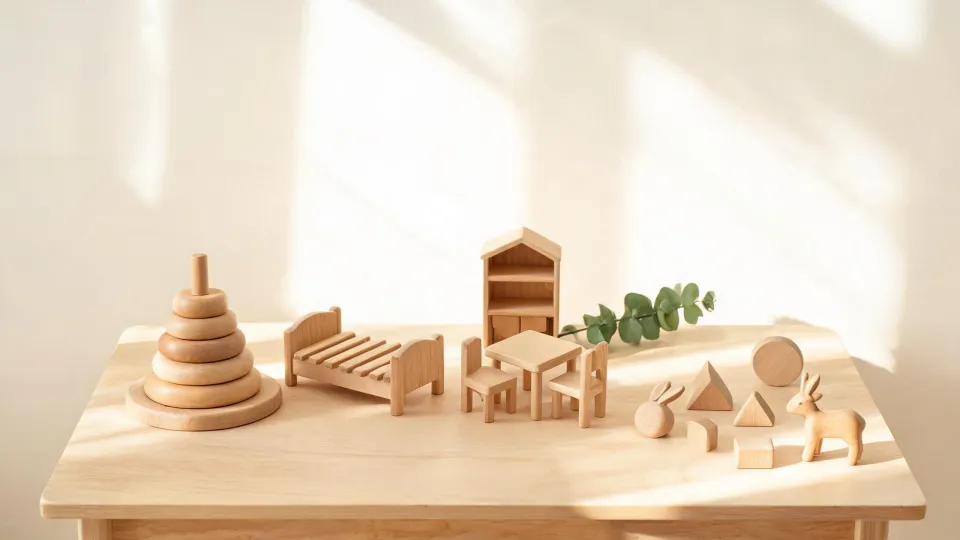
Imagine this: with a birthday party on the calendar and a budget that will not stretch much further, you are standing in the toy aisle. One shelf holds a loud plastic kitchen set with glowing buttons and a price that seems friendly; next to it sits a wooden stacking toy from PlanToys, part of a Montessori-Inspired Collection and tagged as a Spring Favorite under $25. The contrast is hard to miss: the plastic toy screams for attention, while the wooden one waits quietly. You have heard the word 'sustainable' a lot, and you are not sure if it means anything real. This is exactly the moment when a parent starts to wonder whether choosing the greener option means giving up play value, or whether it might actually be the smarter choice.
The shelf moment: why wooden toys deserve a second look
Picture this: you are standing in the toy aisle with a birthday party on the calendar and a budget that will not stretch much further. One shelf holds a loud plastic kitchen set with glowing buttons and a price that seems friendly. Next to it sits a wooden stacking toy from PlanToys, marked as part of a Montessori-Inspired Collection and tagged as a Spring Favorite under $25. The contrast is hard to miss. The plastic toy screams for attention, while the wooden one waits quietly. You have heard the word 'sustainable' thrown around a lot, and you are not sure if it means anything real. This is the exact moment when a parent starts to wonder whether choosing the greener option means giving up play value, or whether it might actually be the smarter choice.
Part of the hesitation comes from a familiar set of assumptions. Wooden toys, many parents believe, are fragile, plain, or simply too old-fashioned to hold a modern child's attention. The word 'sustainable' only adds to the suspicion: it sounds like a marketing premium, a reason to charge more for the same experience. Plastic toys, after all, are cheap, colorful, and everywhere. They are also replaceable, which makes them feel like a good deal when your child loses interest after a week. But the assumptions do not hold up when you look at how a company like PlanToys actually operates. The company's history, its material choices, and its design philosophy all point to a different picture, one where durability and developmental value are not sacrificed for eco-friendly talking points. Understanding that picture starts by looking back at where PlanToys came from.
So the real question is not whether sustainability is a nice idea, but whether it actually improves the toy you bring home. With a limited budget, every dollar counts. You could buy two plastic toys for the price of one wooden one, so the decision comes down to value: what does the extra money buy your child? Does a wooden toy from a company with a long history and a visible environmental commitment offer something that a plastic alternative cannot? The answer depends on the mechanisms behind the brand, the design of the products, and the recognition the company has earned over time. Those mechanisms are not always visible from the packaging, but they are worth examining before you reach for your wallet.
A sustainable way that started in 1981
PlanToys did not appear in a showroom as a fully formed green brand. It began in 1981, when seven university graduates came together with a shared mission of infusing the world with positivity. One of those graduates, Vitool Viraponsavan, became the driving voice behind the company and went on to establish PlanToys. Their first product, the Geometric Sorting Board, launched in that first year and has remained in the catalog ever since. That single product's longevity tells you something important: the company builds toys that survive both the test of a child's attention and the test of time. From those early days in Thailand, PlanToys expanded to Asia, America, Europe, and Australia, carrying a commitment to optimism, creativity, and sustainability. When you look at a PlanToys product in 2026, you are seeing a lineage that connects 1981's original mission to the present day.
The company calls its approach the 'Sustainable Way,' and it is built on three pillars: sustainable materials, sustainable manufacturing, and a sustainable mindset. This is not a single recycled-material gimmick or a carbon offset slapped onto the packaging. Sustainable material means choosing rubberwood trees that have already ended their latex-producing life, so the wood is a byproduct rather than a primary harvest. Sustainable manufacturing means consciously minimizing environmental impact at every step of production, from energy use to waste management. And the sustainable mindset goes beyond the factory floor: it shapes how toys are designed, how long they are meant to last, and how they will be passed on to other children. Together, these three pillars create a system in which 'green' is not a label but a way of doing business.
A clear example of how this system works is PlanWood. During production, leftover sawdust is collected and transformed into a new material called PlanWood, which is then used to mold durable toy parts. The company's own description is direct: 'We use leftover sawdust to create a new material called PlanWood.' That phrase may sound like a small detail, but it changes the way you should think about the brand. Instead of throwing away manufacturing waste, PlanToys turns it into a resource, closing the loop on its own production cycle. For a parent, this matters because it shows the sustainability claim is embedded in the product itself, not just in the box or the advertising. It also explains why the toys feel solid: PlanWood is engineered, not just cut from a tree.
Wooden vs plastic: more to compare than you think
The first dimension to compare is design, and here wooden toys have quietly moved far beyond the simple blocks of the past. PlanToys has received international design recognition, including the Red Dot Design Award, which is given after a rigorous search for good design and innovation. That award matters because it comes from design professionals, not just toy marketers. It tells you that the visual appeal of the toy has been carefully considered, from the curve of a ramp to the proportions of a fruit basket. The result is a toy that looks good on a nursery shelf and still feels inviting in a child's hands. Many plastic toys offer bright colors and flashing lights, but they often lose their charm once the novelty wears off. A well-designed wooden toy, by contrast, uses natural textures and simple shapes that remain visually and tactilely pleasing over years of play.
Durability offers the second dimension, and here the evidence points in a clear direction. In a Red Dot review, PlanToys' Ramp Racer is described as 'sturdy and yet elegantly designed,' with a visual contrast between the wooden track and the colored racing cars that makes it easy for children to follow. Another product, the Jumping Acrobat, is praised as child-friendly, with a design reduced to essentials. These descriptions matter because they come from independent design juries, not from the company's own marketing. A toy that holds up under rough play is not just a financial win for you; it is also a form of sustainability, because it does not end up in a landfill after a few months. Wood, when properly finished, can withstand the drops, throws, and chewing that come with toddler play, while many plastic toys crack at the hinges or lose small parts.
So how do you actually compare a wooden toy and a plastic toy in the store? Start with your child's age and the skill the toy is meant to build. A Montessori-style toy like a stacking set or a shape sorter is designed to teach a specific concept, and PlanToys explicitly focuses on child development and age milestones in its design. Next, examine the material and construction. Are there sharp edges, peeling paint, or thin plastic that will snap? Finally, estimate the toy's lifespan. Would it survive a younger sibling or a trip to the grandparents' house? If you weigh these three factors, the higher price of a wooden toy often becomes an investment in year-round play rather than a one-time expense. The comparison stops being about price alone and starts being about the total value you get for your money.
Awards and a renewing product line: not just a slogan
External validation comes from the awards and recognitions that PlanToys has earned across the world. The list includes the Play for Change Awards from Belgium, the Good Toy Award from Japan, the Red Dot Design Award from Germany, the Oppenheim Toy Portfolio Gold Seal, and a number of others. These are not small-circulation honors; they come from child development experts, design juries, and parenting organizations that test toys against specific criteria. Winning them consistently over the years tells you that sustainability is not the only thing the company does well. The toys also perform on safety, educational value, and play appeal. For a parent spending extra money, this external proof reduces the risk of regret. It gives you confidence that you are buying a product that has been examined by people whose job is to find flaws.
The brand's vitality is another reason to trust the momentum. As of 2026, PlanToys is still releasing new products, and its homepage promotes a 'Montessori-Inspired Collection' as a new arrival. The product line now includes building sets, learning materials, and role-play items that all fit under the same sustainable system. A company that keeps innovating after more than four decades is not resting on an old green label. It is actively listening to parents and teachers, developing toys that meet contemporary needs while staying true to its founding principles. This ongoing renewal matters for your purchase because it suggests the company has a future, which usually means it will stand behind its products and keep investing in quality.
The decision: when that parent finally puts down the plastic toy
Now let's return to the shelf where the decision began. The parent who stood between the plastic kitchen set and the wooden PlanToys stacking toy now has a clearer picture. The wooden toy is not cheaper, and it may not light up or make sounds, but it carries strengths that are easier to see after this closer look: durable construction based on engineered wood, a design philosophy rooted in child development, and a manufacturing system that reuses its own waste. The plastic toy might offer immediate flash, but it usually comes with hidden costs like batteries, broken parts, and short-lived novelty. The wooden toy tells a longer story, one that starts with seven graduates in 1981 and continues every time a child picks up a block at the kitchen table.
The rule that comes out of this comparison can be applied to almost any toy purchase, not just PlanToys. First, ask what specific kind of play or skill the toy supports and whether it matches your child's current stage. Second, check the material and build quality: is it safe, non-toxic, and capable of surviving real play? Third, look for external evidence like awards, parenting reviews, or a company's record of keeping products in its catalog for decades. If a toy passes those three tests, paying a bit more is justified, because the cost per hour of meaningful play will usually be lower than that of a cheap toy that gets ignored after one afternoon. In that sense, sustainable wooden toys are not a luxury for the wealthy; they are a practical choice for any parent who wants fewer, better things in the playroom.
Back at the shelf, the parent’s decision becomes clearer. The wooden PlanToys stacking toy is not the cheapest, nor does it light up, but it brings durable engineered wood, a child-development-centered design, and a production process that reuses its own waste. The plastic kitchen set may shine with immediate flash, yet it often hides costs: batteries to replace, brittle parts, and a novelty that fades quickly. The wooden toy carries a longer narrative—started by seven graduates in 1981 and renewed every time a child picks up a block at the kitchen table. In other words, the choice is not between cheap and expensive, but between a short-lived ornament and a lasting companion.

Jane Smith
I’m Jane Smith, a senior content writer with over 15 years of experience in the packaging and printing industry. I specialize in writing about the latest trends, technologies, and best practices in packaging design, sustainability, and printing techniques. My goal is to help businesses understand complex printing processes and design solutions that enhance both product packaging and brand visibility.