Grand Victorian vs. PlanSpace: Which PlanToys Dollhouse Fits Your Child?
Posted on 2026-08-27 by Jane Smith
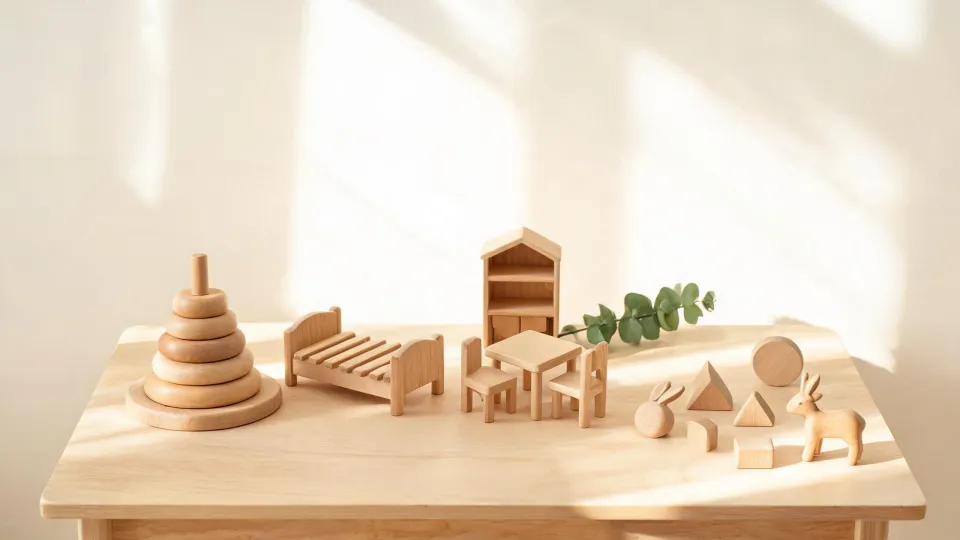
Picture a weekend morning when your child opens a new dollhouse and immediately tries to rearrange the walls. That instinct is the heart of the choice between PlanToys' Grand Victorian Dollhouse and the PlanSpace Modular Dollhouse. One offers a finished, ornate scene that looks like a museum piece; the other offers stackable modules that become a new building each day. Searching for 'plantoys victorian dollhouse reviews' usually leads shoppers to compare specs, but the real decision is about play philosophy, not furniture accuracy.
Two Dollhouses, One Tough Choice
Imagine watching your child for an afternoon. Does she settle into a familiar scene, arranging tiny furniture in a fixed Victorian parlor? Or does she take the walls apart and rebuild a tower, a castle, a shop? Both are forms of creative play, but they exercise different skills and different kinds of patience. The Grand Victorian rewards a child who loves detail and continuity; the PlanSpace rewards a child who loves change and engineering. When you search for 'plantoys victorian dollhouse reviews,' you probably hope to learn which is the better investment, and the honest answer is that it depends on the play pattern you see most days. The two names, after all, share the same catalog, but they ask different things of the child who receives them.
PlanToys' official catalog offers the clearest signal that these are two distinct play systems, not tiers of one product. The same product page features the PlanSpace Modular Dollhouse with an emphasis on stackable, ever-changing construction, while the Grand Victorian Dollhouse appears as one of the brand's signature, ready-to-display homes. Because both are listed side by side under the same sustainable wooden-toy umbrella, the brand is telling you that neither is a replacement for the other—they serve different ways of playing. The catalog’s wording matters more than any spec sheet, because it reveals what the manufacturer thinks each toy is for. The practical consequence: once you understand that the catalog treats them as equals, you can stop asking which is 'better' and start asking which one matches the play habits you see on an ordinary Tuesday afternoon.
The comparison also needs a standard, and PlanToys' own history supplies one. On its About Us page, the company describes its founding in 1981 by seven university graduates and its growth across Asia, America, Europe, and Australia, all while holding to a 'Sustainable Way' that covers materials, manufacturing, and mindset. That background matters because it establishes that both dollhouses come from the same ethical source, made with the same PlanWood material and the same attention to child development. With that baseline, the differentiators shrink to the experience each toy offers your child. So instead of comparing room counts or imaginary square footage, the useful criteria are visual detail, flexibility, emotional pull, and how long the toy stays engaging. That framework keeps the decision honest.
Why PlanToys' Sustainability Matters in the Comparison
Sustainability is not a marketing tagline here; it is the production method behind both dollhouses. PlanToys' own description explains that the brand uses leftover sawdust to create PlanWood, a material that turns waste into a sturdy wooden toy. The About Us page also notes that the company has been making toys in Thailand for nearly four decades, with a 'Sustainable Way' built on sustainable materials, manufacturing, and mindset. That means when you choose either dollhouse, you are also choosing a manufacturing process that avoids cutting new trees for every toy. For a parent comparing two similar-priced wooden houses, this shared foundation removes environmental guilt as a differentiator—both options are green. The real question is not whether the wood is sustainable, but whether the play pattern will keep the toy in use for years, which is the most sustainable outcome of all.
PlanToys' history reinforces why sustainability is baked into the product rather than bolted on. The brand started in 1981 with seven university graduates who wanted to spread optimism through play, and it grew from a small Thai workshop into a company with global reach. Today, the same About Us page connects that founding story to a clear mission: children should grow up closer to nature and understand the importance of a green lifestyle. This is not nostalgia; it is a design constraint. A company that has spent four decades refining sustainable manufacturing is unlikely to cut corners on a detailed dollhouse. So when you weigh the Grand Victorian against the PlanSpace, you can factor in that both inherit a long history of environmental and developmental thinking—which shifts the final choice back to play style.
Design Philosophy: Grand Victorian vs. PlanSpace
The design gap is clear in PlanToys' own catalog. The PlanSpace Modular Dollhouse is introduced with a clear message: stackable fun, endless creations. That phrase signals a build-and-rebuild system rather than a fixed miniature home. The Grand Victorian Dollhouse, by contrast, sits among the brand's classic dollhouse listings, with the detailed, finished aesthetic that suggests immediate situational play. These are not two noise levels of the same toy; they are different categories assembled from the same PlanWood. The catalog's own sidebar of world-class recognitions, which includes Spiel Gut and the Oppenheim Gold Seal, appears to apply to the broader brand rather than to one model, so it cannot tell you which design philosophy is superior. The distinction between the two is not about quality or craftsmanship; it is about whether the toy presents a completed world or a kit for building one.
The play-pattern difference has real consequences for how a dollhouse gets used. With a fixed Victorian scene, a child typically arranges furniture, narrates stories, and returns to the same familiar rooms over months. That repetition can build deep attachment and language skills, but it can also lead to boredom if the child craves novelty. With a modular system like the PlanSpace, the structure itself is the toy: stackable blocks can become a cottage today and a castle tomorrow, which suits children who think in terms of construction and change. The official catalog reinforces this by placing the PlanSpace in a construction-oriented context, while the Grand Victorian appears as a completed dwelling. For a parent, the question becomes whether your child's daily play leans toward inhabiting a world or redesigning it. That is the single most useful distinction you can carry into this purchase.
The Decision Checkpoint: Features, Flexibility, and Feel
Once the two philosophies are clear, the decision comes down to a handful of checkpoints. Start with features: the Grand Victorian offers many distinct rooms and a classic facade, while the PlanSpace offers a smaller footprint that expands as your child builds upward. Then weigh flexibility: the PlanSpace can be reconfigured endlessly, while the Grand Victorian's charm rests in its stability. Emotional appeal is next—the Victorian's ornate details may win immediate 'wow,' but the PlanSpace's custom creations may win long-term affection. PlanToys' long list of international honors appears across its product lines, so you can trust that either choice meets a high developmental bar. That pedigree, however, only confirms quality; it does not tell you which play style your child will adopt. Use the list as a reassurance, not as a tie-breaker.
Compare the two directly and the contrast becomes practical. The Grand Victorian is a showpiece: it will look gorgeous on a shelf, and its detailed rooms invite long, quiet storytelling sessions. The PlanSpace, meanwhile, is a construction set that happens to be a house; its stackable modules mean the structure you see on day one is not the structure your child will have next week. The official PlanToys page for the PlanSpace explicitly frames it as a build-and-rebuild system, while the Grand Victorian appears in the context of ready-made rooms and classic dollhouse play. That is not a judgment about which is more valuable—it is a description of two different jobs. Your job is to match the toy to the child, and the catalog's own framing gives you the vocabulary to do that.
So ask yourself three questions before you buy. First, when your child gets a new toy, does she follow the instructions once and then invent her own rules, or does she prefer to master one layout completely? Second, does she love arranging and narrating a fixed scene, or does she love taking things apart and trying a new structure? Third, what will survive the next birthday: a dollhouse that stays beautiful as configured, or a set that can be rebuilt into something different? These questions do not require a spec sheet. They require watching your child play for ten minutes. The answer to those questions will point you to the Grand Victorian or the PlanSpace more reliably than any review. Spend that time before you spend the money, because the cost of a large wooden toy is easier to justify when it matches the way your child already plays.
Beyond the Facade: Awards and Developmental Value
Behind the wood finishes, PlanToys has accumulated a shelf of recognitions that speak to both design and child development. The brand lists Spiel Gut from Germany, the Red Dot Design Award, and the Oppenheim Toy Portfolio Gold Seal, along with numerous regional honors from Belgium, Japan, and Australia. These awards appear across the brand's range rather than being tied exclusively to one dollhouse, so they function as a quality floor for both models. For a parent comparing two candidates, this is reassuring: neither choice is a gamble in terms of safety or construction. The awards also signal that PlanToys is judged by independent panels, which adds a layer of accountability you do not get from a spec sheet. Yet the very breadth of the list is a reminder that honors are earned by the system, not by a single facade.
Developmental value is the other signal hidden below the surface. PlanToys' materials describe an approach where toys are designed to support physical and cognitive milestones, and independent reviews from design awards highlight how the company's wooden pieces combine sturdy construction with child-friendly forms. That engineering mindset matters when you are investing in a large item like a dollhouse: a toy that is thoughtfully shaped for small hands and built to endure repeated play will earn its place long after the novelty wears off. Both the Grand Victorian and the PlanSpace are part of this lineage, so the developmental claim does not separate them. It does, however, confirm that you are not choosing between a 'learning toy' and a 'fun toy'; both are designed to be both. That reassurance, like the awards, narrows the decision to the play pattern rather than the educational pedigree.
The Verdict: Which Dollhouse Earns Your Playroom?
The verdict, then, is not a single winner but a conditional one. Choose the Grand Victorian Dollhouse if your child is a scene-settler—someone who delights in a detailed, finished home and will return to the same rooms again and again. Choose the PlanSpace Modular Dollhouse if your child is a builder—someone who turns every toy into a construction project and wants the freedom to redesign the house as often as the imagination demands. Both choices rest on the same PlanToys foundation: PlanWood made from leftover sawdust, a Sustainable Way that has guided the company since 1981, and a catalog that markets both products as equal parts of a child-development mission. When you pick either one, you are not compromising on materials or ethics; you are simply matching a play system to a personality. If you still feel torn, give the child ten minutes with each concept and see which one keeps her attention. The verdict will write itself.
The boundary condition is simple: if the honor goes to the wrong play pattern, even a great dollhouse will sit untouched. PlanToys' own collection page frames its mission as 'Better Kids, Better World through Sustainable Play,' and that framing reminds you that the most sustainable toy is one that gets played with. So before you order, spend a week watching how your child builds and narrates. If you see more knocking down and stacking, the PlanSpace will earn its keep; if you see more arranging and storytelling, the Grand Victorian will. If your child is somewhere in between, the PlanSpace's modularity breaks the tie, because it can be played as a fixed house or rebuilt into a different one; the Grand Victorian cannot easily be torn down and reimagined. The Victorian is a finished story; the PlanSpace is an open one. Either way, you are buying into a brand that has spent four decades aligning sustainability with child development—and that alignment is the real reason the choice is a win, whichever facade you carry home.
Whichever you choose, match the toy to the child, not the catalog.

Jane Smith
I’m Jane Smith, a senior content writer with over 15 years of experience in the packaging and printing industry. I specialize in writing about the latest trends, technologies, and best practices in packaging design, sustainability, and printing techniques. My goal is to help businesses understand complex printing processes and design solutions that enhance both product packaging and brand visibility.