The PlanToys Victorian Dollhouse: A Wooden Classic Built for Real Play
Posted on 2026-08-18 by Jane Smith
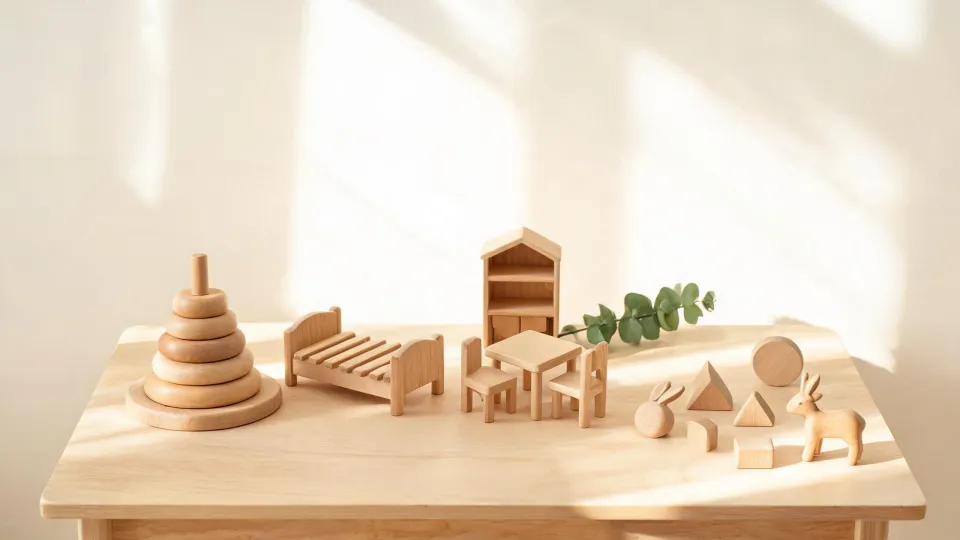
Picture a Saturday morning in a sunlit living room. A birthday box wrapped in brown paper waits on the rug, and a five-year-old tugs at the ribbon with both hands. Inside, wrapped in molded pulp, is the PlanToys Victorian Dollhouse—three levels of rubberwood and PlanWood, with a staircase that invites tiny fingers to climb. The child's first word is not 'beautiful.' It is 'Can we play now?' And that question, it turns out, is exactly the right one to ask.
The First Unboxing: A Scene That Frames the Toy
The unboxing itself takes longer than expected, not because the cardboard is stubborn, but because the child stops to touch every surface. She runs a palm over the roof, opens the front door, and peers into the empty rooms. There are no plastic stickers to peel, no glued-on details to break—just smooth wood that warms in her hands. A parent standing nearby might wonder, 'Is this a display piece or a toy?' The moment the child lifts a small wooden chair and sends it down the staircase, the answer becomes clear. The Victorian Dollhouse is not a miniature to admire from behind a glass shelf; it is a stage. The question that matters is not whether it will stay perfect, but what stories will fill those rooms by the end of the week. With a little furniture and a lot of imagination, the scene transforms: the parlor becomes a castle, the bedroom a rocket ship, the stairway a mountain trail. That first hour of play—moving figures, rearranging rooms, negotiating whose turn it is—is where the toy earns its place in the living room.
That kind of durability and thoughtfulness did not happen by accident. PlanToys began in 1981, when seven university graduates in Thailand came together around a shared belief that toys could channel optimism and creativity. One of them, Vitool Viraponsavan, went on to found the company, and nearly four decades later that founding spirit still guides every decision. Today, PlanToys has branched out to Asia, America, Europe, and Australia, bringing that optimism and creativity to communities everywhere. The brand calls its approach the 'Sustainable Way'—a fusion of sustainable materials, manufacturing methods, and mindset that extends from the rubberwood plantation to the child's hands. This is not eco-marketing; it is the reason the dollhouse feels substantial rather than flimsy. The same focus on child development shaped the design: every edge is rounded, every finish is safe, and every room is sized for small hands. These details matter because the company measures success not by units sold but by how well a child grows through play. When a parent understands this history, the dollhouse stops being an expensive novelty and starts looking like a deliberate investment in how a child plays.
Why It's Not a Museum Piece: Sustainable Materials Meet Daily Play
The word 'Victorian' might conjure images of lace, porcelain, and a velvet rope around the furniture. That assumption is understandable—but it is wrong for this toy. PlanToys builds the dollhouse from rubberwood and PlanWood, a material created from leftover sawdust that would otherwise go to waste. That means the structure is not a delicate ornament; it is a compact, sturdy stage designed for daily grabbing, rearranging, and occasional floor-dropping. The same sawdust that becomes PlanWood is pressed into shapes that resist splinters and hold up to energetic play. Unlike plastic toys that crack or shed micro-bits, wood absorbs the bumps of everyday life and stands up to an occasional throw. The smooth finish is also forgiving when a toddler explores with his mouth, a common stage for the youngest players. So when a child yanks the staircase out and uses it as a bridge for a toy truck, the house takes it in stride. The misconception that 'Victorian' equals 'fragile' collapses the first time a three-year-old parks a wooden tractor in the parlor.
The durability is not a happy accident; it is engineered through the same sustainability commitment that defines the company. PlanToys' 'Sustainable Way' rests on three pillars: sustainable material, sustainable manufacturing, and a sustainable mindset. In practice, this means rubberwood is sourced from a replenished plantation, leftover sawdust is transformed into PlanWood, and every production step is chosen to reduce environmental impact. That attention to process translates directly to the toy's feel. PlanWood is dense and smooth, with a slight give that makes it forgiving when a piece is dropped. The dollhouse has been made this way for nearly four decades, and the company's focus on child safety means the paints and glues meet some of the strictest standards in the industry. These safeguards are not checkboxes; they are the reason the toy can be handled roughly without worry. So when a parent weighs a $100 wooden dollhouse against a plastic one, the real comparison is not price per piece—it is the cost of replacing a flimsy toy within a year versus owning a structure that survives two kids and a move.
From Dollhouse to Classroom: Montessori-Inspired Play Patterns
Montessori educators often talk about the power of open-ended materials—objects that do not dictate their own use but invite a child to invent. The Victorian Dollhouse is a textbook example. PlanToys explicitly markets this and other sets under a Montessori-inspired banner, and the 'designed by your imagination' promise appears on its own product pages. The same pages that showcase the Victorian Bathroom Set reinforce the idea that the house is meant to be lived in, not exhibited. There is no single correct arrangement: the parlor can become a library, the bedroom a bakery, the staircase a runway for toy animals. That flexibility is what supports child development. Manipulating the small furniture strengthens fine-motor control; deciding where everything goes builds executive function; and negotiating roles with a sibling encourages social skill. The included rooms are deliberately bare, asking the child to furnish them with stories. And because the dollhouse is sized for small hands, a three-year-old can independently move pieces without waiting for an adult to help—exactly the kind of autonomy Montessori classrooms aim to cultivate. It is learning disguised as play, and that is why parents who value Montessori principles often choose it over plastic alternatives.
To get the most from the dollhouse, resist the urge to control the story. Place it at the child's eye level—on a low table or a sturdy rug—and let her decide when to engage. Keep a small basket of PlanToys furniture and figures nearby, but do not feel the need to fill every room at once; an empty room can be a powerful invitation. Many parents find that rotating accessories every few weeks breathes new life into the play, turning a familiar house into a fresh scene. If your child is especially young, start with the ground floor and leave the upper floors accessible but uncluttered. The Victorian Bathroom Set, for example, adds a touch of routine—a tiny bathtub and toilet become prompts for stories about getting ready for bed. Above all, follow the child. When she moves the entire family to the roof for a picnic, go with it. The toy's value is not in its historical accuracy but in how completely it absorbs a child's imagination. Over time, the dollhouse becomes a companion that grows with her, from simple stacking and arranging to elaborate narratives that can last an hour or more.
Choosing Your Scene: Victorian vs. PlanSpace Modular
Once a shopper decides on a wooden dollhouse, the next question is often which PlanToys model: the classic Victorian or the newer PlanSpace Modular. The Grand Victorian Dollhouse offers a traditional silhouette—three floors, a pitched roof, and a quiet elegance that looks at home in any living room. It is a single, self-contained structure, which means it takes up a predictable footprint and needs no assembly beyond a few simple clicks. PlanSpace Modular, on the other hand, is a stackable system that can be rearranged into different configurations or expanded with extra rooms. It is more flexible for a child who wants to build a mansion one week and a split-level bungalow the next. The trade-off is aesthetic: the Victorian has that storybook charm, while PlanSpace looks more like a modern building kit. Both come from the same sustainable manufacturing line, so the quality is comparable. For families with limited square footage, the Victorian's compact shape may be the deciding factor. The decision usually comes down to space and play style.
The right choice depends on three questions: How much floor space do you have? How much does customization matter? And who is playing? If the dollhouse needs to live in a corner of the living room and stay visually classic, the Victorian is the answer—it anchors the room like a piece of furniture. If your child loves rebuilding and the space allows a modular footprint, PlanSpace offers more long-term novelty. PlanToys' award history—including Red Dot Design, Good Toy, and Oppenheim Gold Seal—tells you that either model has been vetted for design, safety, and play value. And because PlanToys is known for 'Play Safe, Play Smart,' parents can feel confident in the materials. One practical rule: measure the intended spot before buying, and remember that accessories like the Victorian Bathroom Set, typically under $25, can refresh the play without a second large purchase. If space is tight and the budget is firm, the Victorian Dollhouse is the better pick; if you want a system that can grow with the child, PlanSpace wins.
The Long View: What a Victorian Dollhouse Really Gives
Months pass. The birthday box is long gone, but the dollhouse has not drifted to the back of the closet. On a Tuesday afternoon, the same five-year-old is on the floor with a neighbor, moving the family through the rooms. The staircase is slightly scuffed; a chair has lost a tiny dowel; the roof shows the kind of light wear that comes from being played with daily. Yet the structure remains as solid as the day it was unboxed—proof that the PlanWood and rubberwood construction is more than a talking point. Thanks to the brand's sawdust-to-PlanWood process, the material is dense and resilient, built to withstand years of small hands. It is exactly the kind of longevity the brand's four-decade history promises. The wear marks are not flaws; they are the map of a year's worth of imagination. What began as simple arranging has turned into elaborate, hour-long stories that the child directs with confidence. The sustainability that once sounded like marketing has become the quiet reason the toy is still around, still safe, and still beloved.
The verdict is not about a single play session but about the arc of childhood. PlanToys has produced the Victorian Dollhouse with the same care that earned it Play for Change awards, Spiel Gut recognition, and a Red Dot Design Award—and those honors speak to a consistency that parents can count on. The 'three reasons' PlanToys emphasizes—playing safe, playing smart, and sparking imagination—sum up what this dollhouse delivers. It is safe enough for a toddler, clever enough for a school-age storyteller, and open-ended enough to remain relevant for nearly a decade. The price, when measured against years of daily engagement, becomes a reasonable exchange: a sustainable, developmentally rich toy that does not end up in landfill after a birthday. It is the kind of purchase that survives birthdays, moves, and shifting interests, still holding a place in the playroom. For grandparents looking for a gift of real substance, that is the quiet reassurance. For a parent weighing the cost, the answer is not whether the dollhouse is worth the money, but whether you want a toy that is built to be outgrown—or one that grows with the child.
Back on that Saturday morning, the ribbon fell away and the first question was 'Can we play now?' Months later, the same question is still being asked every afternoon—and that, more than any award, is the answer.

Jane Smith
I’m Jane Smith, a senior content writer with over 15 years of experience in the packaging and printing industry. I specialize in writing about the latest trends, technologies, and best practices in packaging design, sustainability, and printing techniques. My goal is to help businesses understand complex printing processes and design solutions that enhance both product packaging and brand visibility.