PlanToys Victorian Dollhouse: A Field Guide to Open-Ended Wooden Play
Posted on 2026-08-24 by Jane Smith
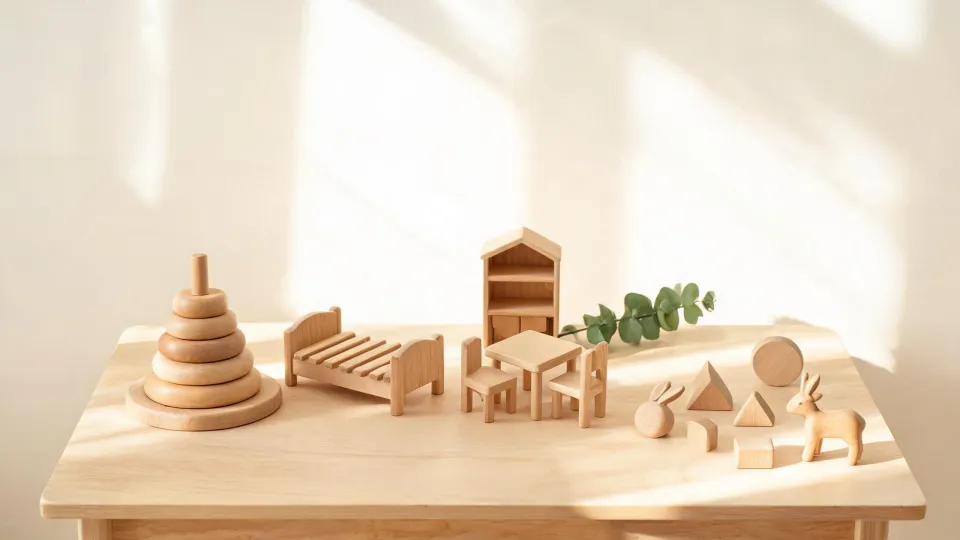
Picture a weekday afternoon when a large cardboard box arrives at your door. Inside, wrapped in recyclable paper, is the PlanToys Victorian Dollhouse: a three-story wooden structure with a pitched roof, tiny doors that open and close, and a staircase begging for miniature feet. As you lift the roof and set the base on the living-room floor, your child circles the box, uncertain where to begin. That uncertainty is exactly where the real play starts—but so is the worry that this might be just another toy that loses its charm by Sunday. The weight of the wood, the clean edges, and the absence of plastic tell you this is something different; the question is whether your child will discover that difference in the hours to come—and whether you'll recognize it when you see it.
The Box Arrives: A Scene of Possibility
Picture a weekday afternoon when a cardboard box arrives at your door. Inside, wrapped in recyclable paper, is the PlanToys Victorian Dollhouse: a three-story wooden structure with a pitched roof, tiny doors that open and close, and a staircase begging for miniature feet. As you lift the roof and set the base on the floor, your child circles the box, uncertain where to begin. That uncertainty is exactly where the real play starts—but so is the worry that this might be another toy that loses its charm by Sunday. The weight of the wood, the clean edges, and the absence of plastic tell you this is something different; the question is whether your child will discover that difference in the hours to come—and whether you'll recognize it.
From the first glance, the Victorian Dollhouse is unmistakably a PlanToys creation—a brand that has spent decades turning rubber trees into developmental toys. On the official site, this dollhouse appears alongside the 'Grand Victorian Dollhouse' listing with companion products like the Victorian Bathroom Set, and it sits in a catalog filled with award mentions, from Red Dot Design to Parents' Choice Gold Seal. The about page adds another layer: PlanToys frames its entire design philosophy around 'child development is our focus,' which means the dollhouse is not just a scaled-down home but a tool whose every hinge and wall was chosen with a child's growth in mind. That same philosophy leads the company to promote its sustainable, non-toxic wooden toys, and the Victorian Dollhouse carries that commitment in its very structure. The product's presence in this context tells you that this is a flagship piece, not an afterthought.
Knowing the brand's child-development and sustainability talk is reassuring, but it doesn't yet tell you whether your child will actually play with it. The product's official listing may include awards and companion sets, but those are external signals—they don't predict how a specific three-year-old or six-year-old will respond to the house when it's standing in the middle of the floor. The real question is not whether the brand has credentials, but whether the design of the house invites repeated engagement. For every parent who has watched an expensive toy sit untouched after a week, that distinction feels immediate. That is the question that matters, and it's one you can only answer by watching what the child does after the initial unboxing excitement fades.
The Misconception: 'It's Just a Dollhouse'
The most common dismissal you'll hear about any dollhouse is that it is 'just a toy'—and a gendered one at that, a relic of a past when little girls were steered toward domestic play while construction sets were reserved for boys. The Victorian Dollhouse, with its pitched roof and tiny furniture, can look like the ultimate example of that old stereotype: pretty, fragile, and destined for a shelf. If you grew up around such houses, you might remember them as static displays, with dolls placed once and never moved again. That memory is real but belongs to a different category—and that distinction matters. The old-style dollhouse was a miniature replica meant to be admired; this one is a working structure meant to be changed.
But the brand's own materials repeatedly turn the phrase 'child development is our focus' into a product principle. In a section of the PlanToys about page dedicated to its mission, the company explains that wooden toys are designed with 'child safety and age milestones' at the center, so that play enhances 'both physical and cognitive development.' Applied to a dollhouse, this goes beyond a pretty facade: doors that open and close build hand strength, rooms that can be rearranged encourage spatial reasoning, and a structure that invites a child to script dialogue, solve problems, and negotiate roles. The developmental intent is visible in every component: hinges are sized for small fingers, room sizes allow a child to reach in without knocking things over, and the open design leaves space for the child's own furniture arrangements. In Montessori terms, the dollhouse functions as a 'practical life' material, not a museum piece—a working tool for the child's own developmental agenda.
The implication lands when you think about what the dollhouse becomes in daily use. Because PlanToys ties its toys to 'child development' and to 'Better Kids, Better World through Sustainable Play,' the Victorian Dollhouse carries a design brief that goes beyond aesthetics. It is built to be handled, reconfigured, and absorbed into a child's narrative play. That is the difference between a dollhouse that occupies a child for an afternoon and one that becomes a recurring landscape for weeks of evolving stories. A child might use it for a family drama one day, a hospital the next, and an animal apartment the day after. Each use exercises different cognitive muscles—planning, sequencing, perspective-taking—and the brand's own language points to exactly this kind of open-ended, developmentally rich play.
From Rubber Tree to PlanWood: A Material Story
Still, a skeptical parent might push back: wood is wood, and any wooden dollhouse can claim to be 'natural.' The question is whether the material story is just marketing. After all, plenty of wooden toys are sanded, painted, and shipped with vague eco-promises. How much of the sustainability narrative is reflected in the making of this specific dollhouse? And practically, if you're paying a premium for a brand like PlanToys, are you paying for the wood grain or for something less visible, like safer materials and a smaller environmental footprint? These doubts are worth taking seriously before you commit to a piece that will sit in your living room for years.
PlanToys' own history provides the evidence. The company was founded in 1981 by a group of university graduates, and its about page emphasizes that the 'Sustainable Way' includes 'sustainable materials, manufacturing methods, and mindset.' The material in question is PlanWood, a composite created from leftover sawdust that would otherwise be discarded. Instead of cutting more rubber trees, PlanToys turns its manufacturing byproduct into a stable, real-wood material that can be molded into precise components. The brand pairs this with a stated priority on 'child safety and age milestones,' meaning the choice of material is meant to serve development, not just green marketing. This is not a single gesture: the about page describes green business practices as 'our forte,' citing the sawdust-based material as an example of a wider production philosophy. In other words, the wood is not a decoration; it is the medium through which the brand's developmental intentions are realized.
For a parent, the practical consequence of PlanWood is a dollhouse that feels less like a fragile heirloom and more like a working toy. Dense enough for hinge pins and connectors, it comes from a process the company describes as part of its 'Green Business Practices,' which reuse leftover sawdust. None of this guarantees that every finish is safe on its own, and the brand does not publish a universal ingredient list. But the design philosophy that treats child safety as a top priority, combined with the use of a recycled wood composite rather than cheaper alternatives, supports a reasonable inference: the toy is built to be touched, chewed on by toddlers at the edge of the age range, and thoroughly handled without exposing children to the kinds of finishes often found on mass-market plastic toys.
When Children Take Over: Open-Ended Play in Action
The real test comes when the dollhouse leaves the box and enters a child's world. The official catalog pairs it with companion sets like the Victorian Bathroom Set, showing how additions extend the story. A child might start by placing a miniature bathtub in the upstairs room, then decide that the doll family needs to move furniture before the bathroom can be installed. The modular nature of the collection means the house is not a fixed diorama but a stage that can be reset every day. Its presence on awards lists like Red Dot and Parents' Choice, plus the brand's emphasis on 'Play Creatively Within Your Dream House,' signals open-ended invention, not a single correct arrangement. The separate sale of the bathroom set only reinforces this: each new piece is a prompt, not a completion.
When you watch a child engage with a dollhouse, you are watching several developmental threads braid together. Fine motor control develops as small hands turn doorknobs, close the front door, and carry miniature furniture up the stairs. Spatial reasoning sharpens as the child tests whether a bed fits through a doorway and how to line up the family. Language and social skills emerge as the child assigns roles, voices, and conflicts to the dolls. PlanToys' stated goal of designing for 'physical and cognitive development' is realized in exactly these moments. One child may narrate a full story while moving dolls from room to room; another may solve a spatial puzzle by turning the staircase so it leads somewhere new. Both are practicing the same cognitive skills that the brand's safety-and-milestones design is meant to support. The dollhouse is not a passive object that teaches through its details; it is a scaffold that gives a child the freedom to practice planning, negotiation, and narration without adult instruction.
For a practitioner's tip, don't treat the dollhouse as a complete kit. Start with the house alone, let your child discover empty rooms, then add a set like the Victorian Bathroom Set only when play stalls. That missing piece becomes a fresh prompt for a new story. Resist the urge to demonstrate the 'right' way to play; instead, ask open questions about what the dolls are doing and let the child's answers shape the next scene. Over time, it becomes a fixture of imaginative life, not because of realism, but because it gives every new piece a purpose. Think of the house as a base camp: the rooms are the terrain, and you are the expedition leader who lets the child set the route.
The Verdict: Choosing the Right Moment
Remember that Tuesday afternoon when the box arrived? The question you had then—whether this would be a treasure or dust-collector—now has a clear answer. It earns its place when you understand it's not a static replica but a developmentally designed tool for open-ended play. The first afternoon may be simple exploration, but the dollhouse's value compounds as the child grows, shifting from fine-motor practice to elaborate social narratives. It becomes the backdrop for a thousand small decisions, and that is precisely the point. The answer becomes visible in the child's willingness to return to it again and again, not because it has a button to press, but because it offers infinite arrangements.
Making the investment hinges on a simple rule. If your child already gravitates toward pretend play, building with blocks, or arranging small objects, this dollhouse will reward that tendency. The official listing shows it does not stand alone—companion sets like the Victorian Bathroom Set refresh play without a new toy. That extensibility is the key to avoiding the 'played-with-once' problem: when the initial novelty fades, a single new set—a bathtub, a piece of furniture—reopens the entire house. The decision rule, then, is to choose this dollhouse for a child who already enjoys creating worlds, and to budget for one companion set every few months if the play demands it. This is how a well-designed dollhouse escapes the fate of the once-used toy—it is designed to be added to, not completed.
Every toy eventually leaves the playroom, but the question is what the child carries away from it. With the Victorian Dollhouse, the aftermath is not a heap of broken plastic but a set of sturdy, natural pieces that can be passed down or sold. The real measurement, however, is in the child who learned to open doors, negotiate roles, and imagine a household into being. So before you close the box, ask yourself: what kind of play do you want to invite into your home? And is this the structure that will let your child build it? The answer is already visible when the child rearranges rooms for the third time, treating the house as their own stage.
For your child, that Tuesday afternoon is just the beginning of a story they'll keep rewriting.

Jane Smith
I’m Jane Smith, a senior content writer with over 15 years of experience in the packaging and printing industry. I specialize in writing about the latest trends, technologies, and best practices in packaging design, sustainability, and printing techniques. My goal is to help businesses understand complex printing processes and design solutions that enhance both product packaging and brand visibility.