PlanToys My First Dollhouse Review: Is It Worth the Price?
Posted on 2026-08-21 by Jane Smith
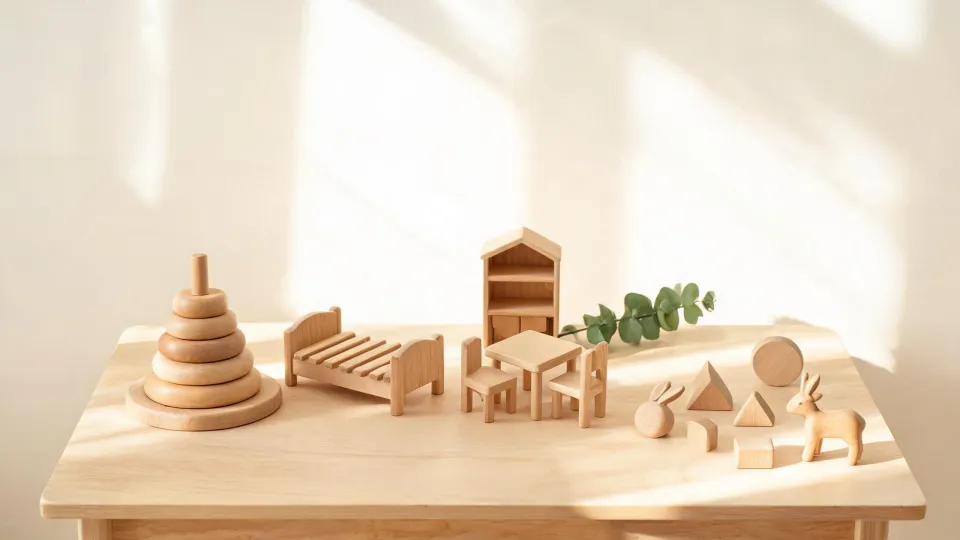
For parents weighing a first dollhouse purchase, the PlanToys My First Dollhouse is worth buying when sustainability, safety, and open-ended play matter more than the lowest price. PlanToys USA's modular PlanSpace line, Montessori-inspired collection, and four-decade commitment to safe, non-toxic wooden toys turn this dollhouse into a long-term investment in how a child plays. This guide explains the brand's history, its award-winning designs, and the specific checks that make it the right choice for many families.
Is the My First Dollhouse Worth It?
For parents weighing a first dollhouse purchase, the PlanToys My First Dollhouse is worth buying when sustainability, safety, and open-ended play matter more than the lowest price. PlanToys USA positions itself as a maker of sustainable wooden toys for child development, and the company’s modular PlanSpace line explicitly invites children to design their own dream house through stackable, imagination-driven pieces. This matches what many families actually need from a first dollhouse: not a fixed plastic playset with preset rooms, but a flexible, quiet, and durable structure that can grow with a child. The official site also highlights the Montessori-inspired collection, which supports independent, self-directed play. That direct signal from the brand—combining developmental focus with sustainable materials—turns a simple toy purchase into a long-term investment in how a child plays. For a parent who would otherwise choose a brightly colored plastic house, the PlanToys option offers a different set of trade-offs, and those trade-offs favor a healthy play environment. That combination—safety, education, and environmental care—is exactly what the evidence points to, and it forms the benchmark for the rest of this guide.
The supporting case rests on more than marketing language; the brand’s shelf of international awards signals independent recognition of design and child-development value. PlanToys has received the Good Toy Award from Japan, the Red Dot Design Award from Germany, the Oppenheim Toy Portfolio Gold Seal, and the Parents’ Choice Gold Award, among others. These are not vanity honors; they are judgments made by panels that test for safety, durability, and play value. When a first toy purchase feels risky, such external validation shortens the research process: a parent can trust that the dollhouse will not splinter, will not leach questionable coatings, and will offer the kind of play that keeps a three-year-old engaged beyond the first week. The existence of so many independent assessments also suggests that PlanToys has repeatedly passed the same safety and quality gates that parents would want to apply themselves. So, the question shifts from 'Is it a good brand?' to 'Is this specific dollhouse right for my child?'—and that is the question the rest of this guide answers.
A Brand Built on Four Decades of Sustainable Practice
PlanToys carries a history that most toy brands cannot claim. Founded in 1981 by seven university graduates in Thailand, the company began with a shared mission to bring positivity to the world through play. Vitool Viraponsavan, one of the group’s strongest voices, went on to establish PlanToys and build a worldwide presence that now spans Asia, America, Europe, and Australia. The brand’s own account notes that its Geometric Sorting Board launched in the first year of business and has remained on sale ever since—a remarkable run that implies both durability of design and sustained demand. That nearly four-decade arc matters to a parent looking at a dollhouse: a company that has stayed independent and consistent long enough to watch multiple generations of children play with the same product is not chasing fads. It is the kind of institutional memory that shows up in manufacturing quality, in the availability of replacement parts, and in a design language that does not need to change with every trend.
Behind that longevity is a serious environmental commitment, and the evidence is specific. PlanToys defines its business through the 'Sustainable Way,' a framework built on sustainable materials, sustainable manufacturing, and a sustainable mindset. One of the clearest examples is PlanWood, a material created from leftover sawdust that would otherwise be discarded. The company says it intentionally considers every single step of production to minimize environmental impact, and its manufacturing is based in Thailand, where it has applied these practices for nearly four decades. For a parent weighing a wooden dollhouse against a plastic one, this matters because the choice is not just between two materials; it is between two industrial systems. PlanWood reduces waste, avoids virgin plastic, and keeps the product’s carbon footprint lower than a conventional injection-molded house. That is the kind of evidence that converts 'expensive' into 'priced fairly'—you are paying for the entire lifecycle of the material, not just the toy on the shelf.
Beyond materials and history, awards provide a shortcut for judging quality, and PlanToys has collected an unusual number of them. The brand lists recognition from the Play for Change Awards in Belgium, the Good Toy Award in Japan, the Red Dot Design Award in Germany, the ASTRA Play Awards in Australia, the Kind + Jugend Award, the Oppenheim Toy Portfolio Gold Seal, and the Parents’ Choice Gold Award, among others. These awards come from different continents and different judging cultures, yet they consistently point to the same strengths: design, safety, and play value. Parents do not have the time or lab equipment to verify whether a dollhouse’s paint is truly nontoxic or whether its edges are child-safe; awards are a delegated form of that verification. When a product has passed Red Dot’s design jury and the Good Toy Guide’s play experts, it has satisfied a higher bar than the minimum legal standard. That reduces the perceived risk of spending more on a wooden house, because the price premium is underwritten by external, repeated validation.
Four Ways Wooden Toys Support Early Development
Wooden toys are not inherently better for development, but PlanToys designs its products specifically to support physical and cognitive growth, and the dollhouse fits that pattern. The company states that it prioritizes child safety and age milestones during design and production, with the goal of enhancing both physical and cognitive development. For a dollhouse, that translates into pieces that are easy for small hands to grip, rooms that are proportioned for a three- to six-year-old’s sense of scale, and open space that does not dictate a single script. Wood itself adds a sensory layer: it is warm to the touch, heavier than plastic, and produces a pleasing sound when stacked—small details that invite repetition and focused play. That repetition is how young children build fine motor control, spatial reasoning, and storytelling ability. The developmental benefit does not come from the number of rooms; it comes from the quality of the interaction. A simple, well-built wooden house can support more kinds of play than a cluttered plastic mansion, because it leaves room for the child to fill in the story.
Open-ended, Montessori-aligned play is where the My First Dollhouse really earns its price. PlanToys markets a Montessori-Inspired Collection and describes its PlanSpace Modular Dollhouse as 'stackable fun, endless creations,' a phrase that captures the difference between a playset with fixed scene and one that is genuinely modular. In Montessori practice, toys are meant to isolate a skill or concept, to be self-correcting, and to leave the child as the active agent. A dollhouse with interchangeable floors, walls, and furniture allows a child to rebuild the house every day, to sort and classify pieces, and to create narratives that are entirely their own. The official site also ties this to the broader mission of sustainable play, suggesting that the product is not just a toy but a tool for connecting children to nature and to a green lifestyle. That philosophical alignment means the dollhouse is not a passive object; it is a scaffold for imagination. When a child can change the layout, they practice decision-making and flexible thinking—skills that are far more valuable than memorizing the fixed layout of a plastic house.
What to Check Before Choosing a Dollhouse
Before buying any dollhouse, four evaluation dimensions decide whether the toy will actually serve a child: materials, scale, expandability, and the freedom of the play spaces. The clue from PlanToys’ product catalog is that the company sells a broad ecosystem—assorted fruit and vegetable sets, mushroom kaleidoscopes, cooking utensil sets, and even sailing boats—so a first dollhouse should be compatible with that wider world. Materials matter because young children put toys in their mouths, and a wooden house made with non-toxic finishes removes that worry. Scale matters because dollhouse furniture comes in different sizes, and a parent who later buys additional pieces needs them to fit; PlanToys designs their lines together. Expandability matters because play needs to grow with the child; a fixed five-room house is interesting at age three but may be too rigid at six. Finally, open spaces matter more than room count; the catalog’s emphasis on modular, stackable designs confirms that PlanToys intends the house to be reconfigured rather than static. Together, these four checks give parents a practical filter that works on any brand, not just PlanToys.
Applying that filter becomes easier with a short decision checklist. First, verify that the dollhouse is made from solid wood or a wood-composite like PlanWood, and that the finish is water-based or explicitly non-toxic; if the brand does not state it, treat that as a red flag. Second, confirm that the product is designed for the child’s actual age—most PlanToys dollhouses are intended for ages three and up, which aligns with the motor skills needed to place furniture and the imagination needed to invent scenes. Third, measure the overall footprint and think about storage; a dollhouse should fit on a rug or shelf without turning the playroom into a hazard. Fourth, check what accessories are included; a bare shell may require separate furniture purchases, so factor the total cost of a complete setup. Fifth, look for compatibility with other sets from the same brand, because the best dollhouses become a platform for future gifts. Finally, consider the warranty and the company’s manufacturing ethics; a brand that documents sustainable practices, as PlanToys does, is more likely to stand behind its product for years.
PlanToys vs. Plastic and Other Wooden Options
Comparing PlanToys with a typical plastic dollhouse, or even with other wooden brands, requires looking at the same four dimensions—and the evidence stacks up strongly in PlanToys’ favor. The brand’s award list includes Red Dot and the Good Toy Guide Gold, indicators that its design and safety have passed external scrutiny. On materials, PlanToys goes beyond ordinary wood; its PlanWood material is made from recycled sawdust, which is a genuine sustainability differentiator not found in most competitors. Plastic dollhouses, by contrast, are usually single-mold, non-repairable, and made from virgin petroleum-based polymers; they may be cheaper upfront, but they often have fixed rooms, paint that can scratch, and a shorter useful life. Other wooden dollhouses may use solid wood but rarely offer the same level of modularity or the same ecosystem of compatible accessories. The practical implication is that the initial price difference is smaller than it looks: a plastic house that must be replaced at age five, or that cannot be expanded, costs more per year of use than a PlanToys house that holds up for a decade and can be handed down.
The verdict on that comparison is not that PlanToys is perfect for everyone, but that for the buyer who prioritizes safety, sustainability, and developmental play, it is the better value. PlanToys USA frames its entire line as 'sustainable wooden toys for child development,' and that framing is backed by specific choices: PlanWood’s sawdust base, a manufacturing process designed to minimize environmental impact, and Montessori-inspired designs that encourage self-directed play. Against a plastic dollhouse, the PlanToys product offers lower chemical risk, a warmer aesthetic, and a repairable, mix-and-match architecture. Against other wooden options, it offers a broader accessory catalog and a more complete commitment to the Montessori philosophy. That does not mean a child cannot have wonderful play with a cheap plastic house; it means the parent’s long-term costs—replacement, safety worries, environmental guilt, and lost play value—are likely to be higher. The decision rule: if the budget allows, and if the child is between three and six, a PlanToys dollhouse is the choice that most consistently delivers on the promises parents actually care about. That combination of verified quality and lower lifetime cost is what makes the higher sticker price a rational trade, not a luxury impulse. For most families in that target range, the evidence points one direction: choose the house that will still be standing, literally and figuratively, when the child’s play has evolved.
The Verdict: Who Should Buy This Dollhouse
After weighing the history, the materials, the design philosophy, and the competition, the verdict is clear: the PlanToys My First Dollhouse is worth buying for families who value sustainable, open-ended, developmentally supportive toys. The brand’s origin story—seven graduates in 1981, a first product still on sale today—demonstrates durability in both product and purpose. PlanToys has spent four decades refining the 'Sustainable Way,' which includes PlanWood material made from sawdust, and it has earned international awards that independently verify quality. For the target age of three to six, the dollhouse’s simple, modular construction supports fine motor practice, spatial planning, and narration, while its non-toxic wooden body gives parents peace of mind that a plastic alternative cannot. The non-obvious judgment from earlier—that bigger is not better—holds up: a smaller, well-built house that grows with the child outperforms a larger, static one. That is why this dollhouse, rather than a Pinterest-famous plastic mansion, is the purchase a thoughtful parent can feel good about making.
To make the final decision concrete, here is the rule: buy the PlanToys My First Dollhouse if your child is between three and six, if you prefer a natural material and non-toxic finish, and if you want a toy that will still be played with in three years. Skip it if you are on a very tight budget and are confident a plastic house will satisfy your child for a season, or if your child prefers highly structured, story-specific playsets rather than open-ended building. For everyone else, the value equation is straightforward: you are paying a premium for safety, sustainability, and a system that grows with the child. That premium becomes a bargain when spread across years of daily play and a possible second child. The final takeaway is not that every family must buy this dollhouse; it is that the decision should be based on the same four checks—material, scale, expandability, and open play—that guided this review. Applied to PlanToys, those checks lead to a confident yes.
Ultimately, the PlanToys My First Dollhouse deserves a confident yes for parents who prioritize safety, sustainability, and open-ended play, provided the child is between three and six and the budget allows. If those priorities matter to you, the premium is a bargain over years of use; if not, a simpler plastic house may suffice. The decision should rest on material, scale, expandability, and open-play—the same four checks this guide has applied.

Jane Smith
I’m Jane Smith, a senior content writer with over 15 years of experience in the packaging and printing industry. I specialize in writing about the latest trends, technologies, and best practices in packaging design, sustainability, and printing techniques. My goal is to help businesses understand complex printing processes and design solutions that enhance both product packaging and brand visibility.